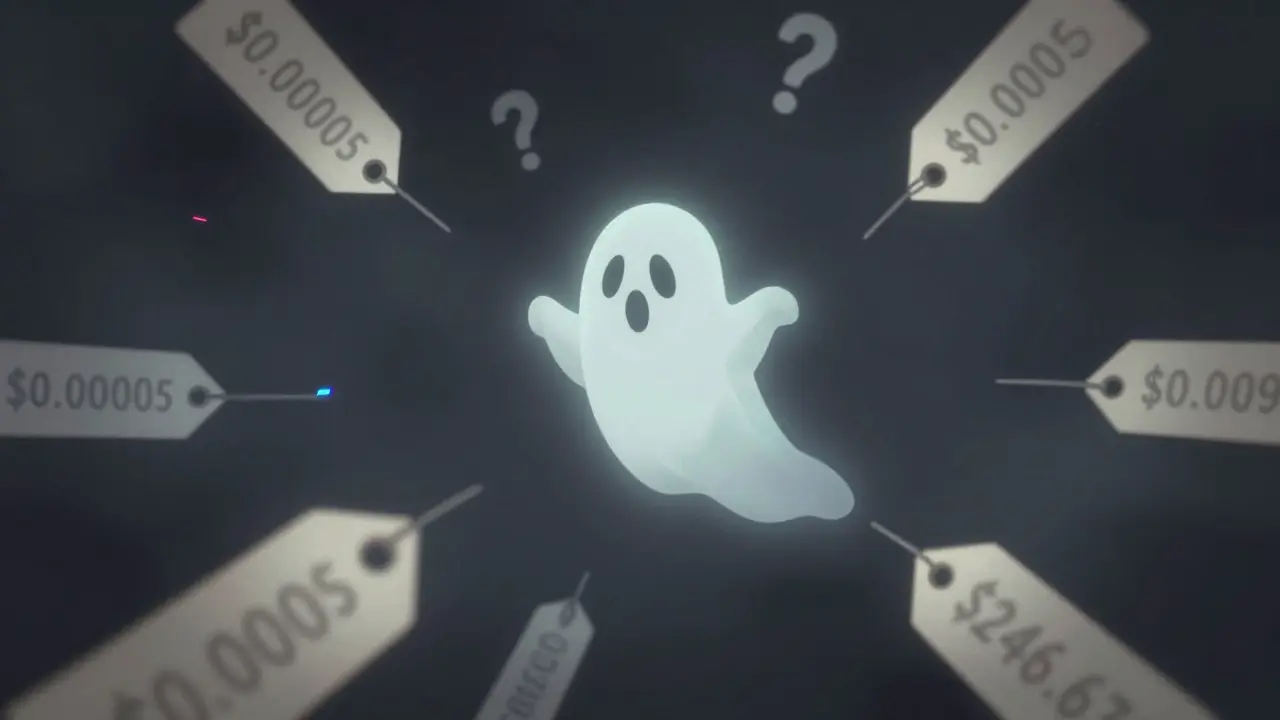
The name L7 (also called LSD or L7 DEX) pops up in crypto forums and price trackers, but if you dig deeper, you’ll find almost nothing real behind it. It’s not a project you can trust. It’s not a coin you can easily buy. And it’s certainly not something any serious investor would touch. This isn’t a story about a hidden gem. This is a story about a ghost.
What is L7 (LSD) even supposed to be?
Different websites give you different answers. CryptoSlate says L7 is a Web3-based asset management protocol for professional investors. CoinCarp calls it a decentralized perpetual trading platform. P2P.Army lists it as a token on Ethereum with a contract address: 0xcD1B51b87a8a7137D6421bA5A976225187a26777. But none of these descriptions come from an official source. There’s no whitepaper. No team page. No GitHub repo. No roadmap. No blog. Just scattered, conflicting claims on third-party data sites. The token itself is built on Ethereum, which means technically, it’s possible to interact with it using a wallet like MetaMask. But that doesn’t mean you should. The contract exists - but nothing else does.Market data? It’s a mess.
Look at the numbers, and you’ll see chaos. Binance says L7 is priced at $0.009296 with a $380K market cap. CryptoSlate says $0.00045. CoinCodex says $0.00005. All of them agree on the supply: 40.94 million tokens in circulation, capped at 210 million. But none of them agree on price. Why? Because there’s no real trading. Binance explicitly says L7 is not listed on their platform. Yet they still have a "How to Buy L7" guide - which, ironically, doesn’t tell you how to buy it anywhere. CoinCarp lists zero exchanges that support L7 trading. The 24-hour volume on Binance is $0. On CryptoSlate, it’s $1,080. That’s less than what a single Bitcoin transaction costs on average. This isn’t a market. It’s a data glitch.No liquidity. No buyers. No sellers.
If you can’t trade it, it’s not money. It’s a digital note. And L7 has zero liquidity. You won’t find it on Uniswap, PancakeSwap, or any major DEX. You won’t find it on Kraken, Coinbase, or KuCoin. Even smaller exchanges like MEXC or Gate.io don’t list it. The few places that mention it - like P2P.Army - show error messages when you try to load the page. That’s not a bug. That’s abandonment. Compare that to real DEX tokens like UNI or CAKE. They have billions in locked value, thousands of daily trades, active governance votes, and teams that post updates every week. L7 has none of that. It’s like a store with a sign out front but no shelves, no staff, and no customers.Technical indicators? Meaningless.
CoinCodex says L7 has a 50-day moving average of $0.000348 and a 14-day RSI of 24.03 - which technically means it’s oversold. But that’s like saying a broken car is "low on fuel." It doesn’t mean it’s going to start. The Fear & Greed Index says "Greed" at 62. That’s absurd. Greed implies people are buying. No one is buying. The price swings are artificial, likely from bots or pump-and-dump groups playing with pennies on obscure platforms. The 200-day moving average is $0.00109. That’s higher than the current price. That’s not a trend. That’s a corpse. The token’s price has been falling for over a year, and there’s no sign of recovery.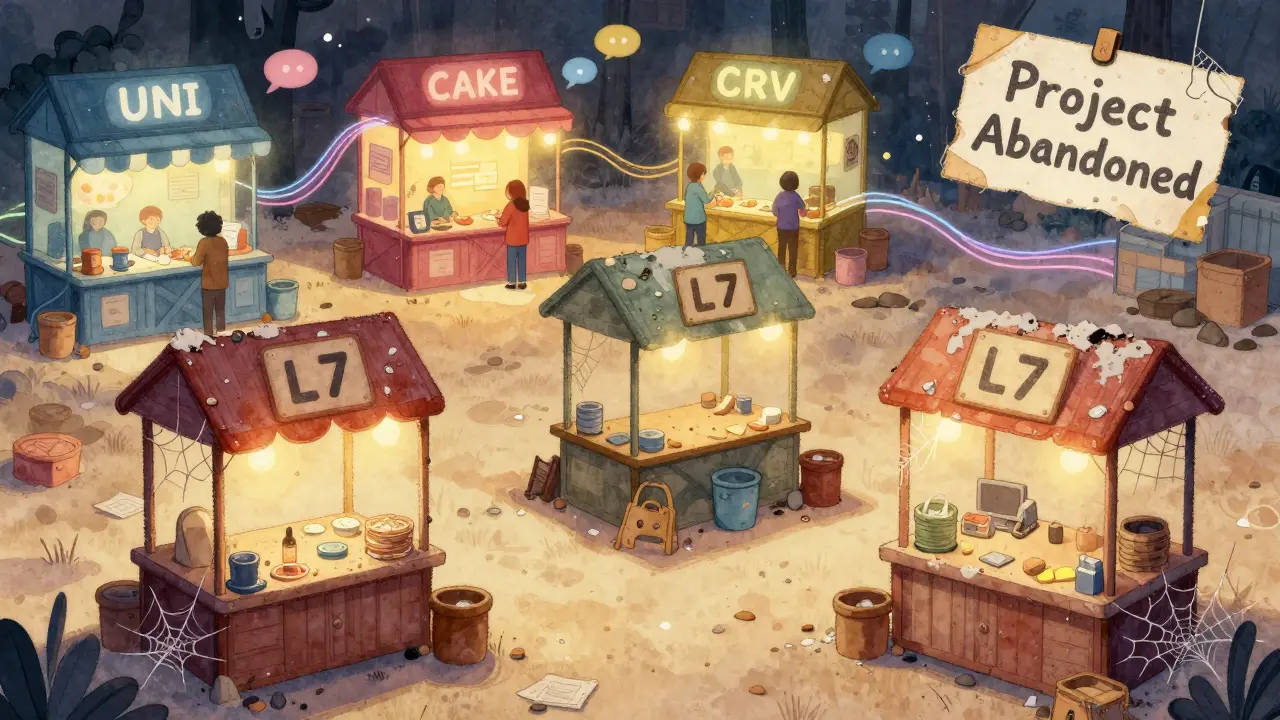
Who’s talking about it?
Check Reddit. Nothing. Twitter? A few automated bots spitting out price alerts. No real users. No discussions. No memes. No memes means no community. And no community means no future. Binance shows zero sentiment votes - no "Good," no "Bad." CoinGecko and CoinMarketCap have no reviews. Trustpilot? Empty. Even the most obscure tokens get at least a few angry comments from people who lost money. L7 doesn’t even have that. It’s like it doesn’t exist in the real world.Why does this even exist?
There are two likely answers. Either someone created L7 as a speculative experiment - a token with no plan, no team, and no purpose - and then walked away. Or worse, it’s a scam. A ghost token. A placeholder designed to look like a project so someone can dump it on unsuspecting buyers who find it on a price tracker and think, "Hey, it’s cheap. Maybe it’ll pump." The fact that multiple sites list wildly different prices? That’s classic. It means someone is manipulating the data on low-volume exchanges, creating fake demand to lure in buyers. Once enough people buy in, the creator vanishes with the money.What about those wild price predictions?
BitScreener claims L7 could hit $246.63 by 2050. That’s a 5 million percent increase from today’s price. It’s mathematically impossible without a complete overhaul of the project - which doesn’t exist. That’s not analysis. That’s fantasy. Real analysts don’t make predictions like that. They look at teams, adoption, utility. L7 has none of those. CoinCodex’s prediction of a -25% drop to $0.00003747 by July 2025? That’s more realistic. But even that assumes the token is still alive. It might be worth less than a penny by now.
Should you buy L7 (LSD)?
No. If you’re thinking of buying L7 because it’s cheap, you’re not investing. You’re gambling. And you’re gambling against a system designed to fail. There’s no utility. No team. No liquidity. No future. Even if you could buy it, you couldn’t sell it. You’d be stuck with a token no one wants. Real crypto projects don’t hide. They post updates. They answer questions. They build. L7 doesn’t do any of that. It’s a digital ghost. A data artifact. A warning sign.What should you do instead?
If you’re looking for exposure to decentralized exchanges, go for the real ones: UNI, CAKE, or CRV. They have volume, teams, audits, and communities. If you want to explore new tokens, look for ones with:- A clear whitepaper
- A public development team
- Active GitHub commits
- Real trading volume on major exchanges
- Community discussions on Reddit and Twitter
Is L7 (LSD) a real cryptocurrency?
Technically, yes - it exists as an Ethereum token with a contract address. But it has no team, no utility, no liquidity, and no community. It’s not a functioning cryptocurrency in any practical sense. It’s a digital artifact with no purpose.
Can I buy L7 on Binance or Coinbase?
No. Binance explicitly states L7 is not listed for trading. Coinbase, Kraken, KuCoin, and other major exchanges don’t list it either. Any site claiming you can buy it on a major exchange is misleading you.
Why do different websites show different prices for L7?
Because there’s almost no real trading. The prices you see are pulled from tiny, illiquid exchanges or generated by bots. These numbers aren’t based on actual market activity - they’re noise. That’s why one site says $0.00005 and another says $0.009 - they’re not measuring the same thing.
Is L7 a scam?
It’s not confirmed as a scam, but it has all the hallmarks of one: no team, no roadmap, no liquidity, fake price data, and zero community. Most experts would treat it as a high-risk ghost token - not a legitimate investment.
What happened to the L7 project?
There’s no evidence it ever had a real project. No code commits, no announcements, no updates since at least 2023. It appears to have been launched without a plan and then abandoned. The website, if it ever existed, is gone. The team, if there was one, disappeared.
Can I use L7 in DeFi or staking?
No. There are no known DeFi protocols, staking platforms, or liquidity pools that accept L7. Even if you hold it in your wallet, you can’t use it for anything. It has no functional purpose in the blockchain ecosystem.
Should I even try to buy L7 just to see what happens?
Don’t. Even if you buy a few cents’ worth, you won’t be able to sell it. You’ll be stuck with a token that has no market. You’ll waste time, gas fees, and mental energy. There’s no upside - only risk.