Zero-Knowledge Proofs: How Privacy Tech Is Changing Crypto
When you send Bitcoin or use a DeFi app, you’re often forced to expose your entire transaction history. But what if you could prove you have enough funds to make a payment without showing how much you have? That’s the power of zero-knowledge proofs, a cryptographic method that lets one party prove to another that a statement is true without revealing any information beyond the truth of that statement. Also known as ZKP, it’s the quiet engine behind private blockchains, anonymous wallets, and secure smart contracts.
Zero-knowledge proofs aren’t magic—they’re math. Think of it like proving you know a password without saying the password. In crypto, this means you can verify a transaction is valid without revealing sender, receiver, or amount. This isn’t theoretical. Projects like Zcash use zk-SNARKs, a specific type of zero-knowledge proof that’s fast and compact, making it ideal for blockchain use to hide transaction details entirely. Ethereum is now integrating zk-Rollups, a scaling solution built on zero-knowledge proofs that bundles hundreds of transactions into one secure, private batch to cut fees and boost speed. These aren’t just upgrades—they’re redesigns of how trust works on the blockchain.
Why does this matter to you? Because privacy isn’t just about secrecy—it’s about control. If you’re using DeFi, trading tokens, or holding crypto, your on-chain activity is public forever. Zero-knowledge proofs change that. They let you interact with financial systems without turning your life into an open ledger. You can prove you’re eligible for a loan without showing your income. You can claim an airdrop without revealing your wallet history. You can trade without letting everyone see your strategy. And with more blockchains adopting these tools, this isn’t a niche feature anymore—it’s becoming the standard.
What you’ll find below are real-world examples of how zero-knowledge proofs are being used, abused, and misunderstood. From hidden transactions on obscure tokens to scaling solutions powering the next wave of crypto, these posts cut through the hype and show you exactly how this tech works today—no jargon, no fluff, just what you need to know.
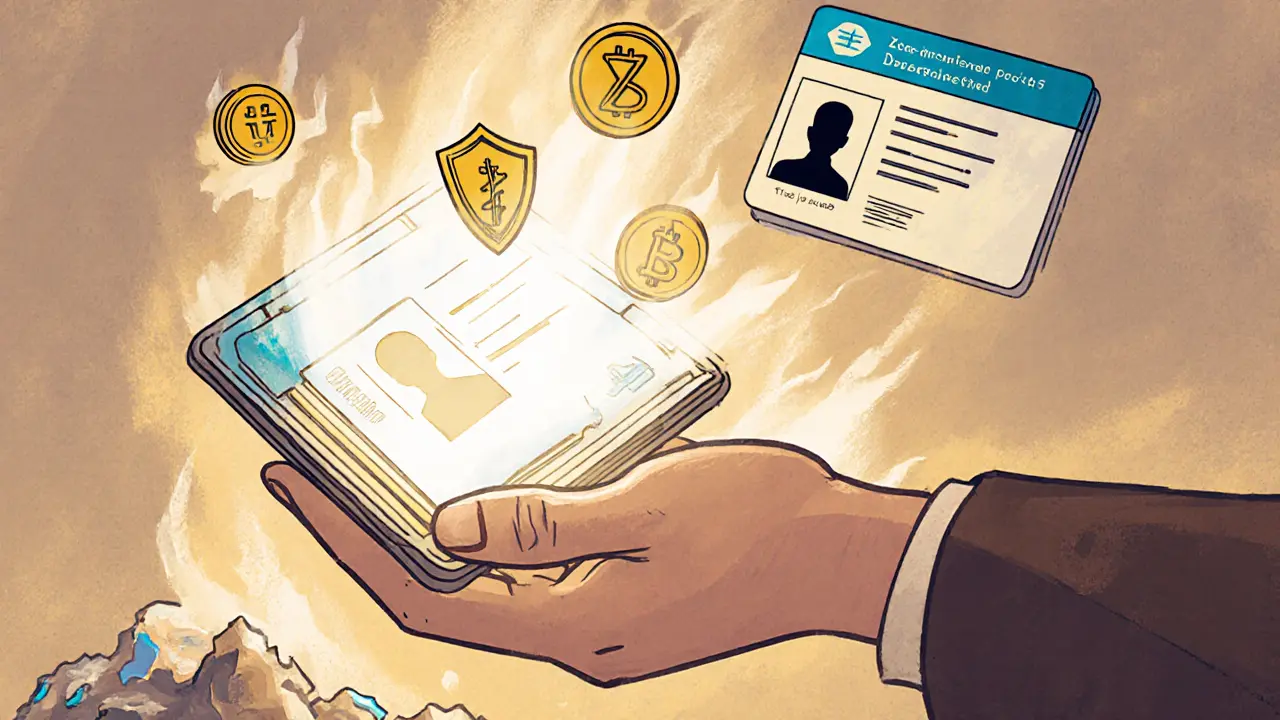
Privacy-Preserving Identity Verification: How Blockchain Keeps Your Data Safe
Privacy-preserving identity verification uses blockchain and cryptography to prove who you are without revealing your personal data. Learn how zero-knowledge proofs and decentralized IDs are replacing traditional ID checks.