Sanctions Detection in Crypto: How Blockchain Tracks Restricted Transactions
When you send crypto, sanctions detection, a system that flags transactions linked to blocked entities like terrorists, drug cartels, or sanctioned countries. Also known as financial sanctions screening, it's the reason some exchanges freeze your funds even if you did nothing wrong. This isn't science fiction—it’s built into platforms like Bitbuy and Millionero, which follow European and U.S. rules to avoid fines. If you trade on a DEX like Omni Exchange V3 or SunSwap V3, you might skip KYC, but that doesn’t mean you’re invisible. Blockchain analysis tools trace every move, and if your wallet ever touched a sanctioned address, you’re flagged.
Sanctions detection doesn’t just look at names. It maps wallet connections, tracks fund flows across chains, and uses clustering algorithms to spot hidden links. A wallet that received funds from a Russian exchange tied to evasion—like those used to bypass restrictions in Russia—can trigger alerts even years later. Tools like Chainalysis and Elliptic power this behind the scenes, and they’re now used by smaller platforms too. That’s why even meme coins like DOGMI or CJ coin, which have no team or utility, still get monitored. Regulators don’t care if it’s a joke token—if it moves money from a banned entity, it’s a risk.
What you’ll find in these posts isn’t theory. It’s real cases: how UZX lost its users because it ignored compliance, why VikingsChain vanished after being flagged, and how Switzerland’s Crypto Valley built rules that actually work. You’ll see how AML crypto systems catch scams before they spread, why some exchanges refuse fiat entirely to avoid scrutiny, and how zero-knowledge proofs are changing the game by proving you’re clean without revealing your history. This isn’t about stopping innovation—it’s about making sure crypto doesn’t become a tool for criminals. The platforms that get this right survive. The ones that don’t? They disappear.
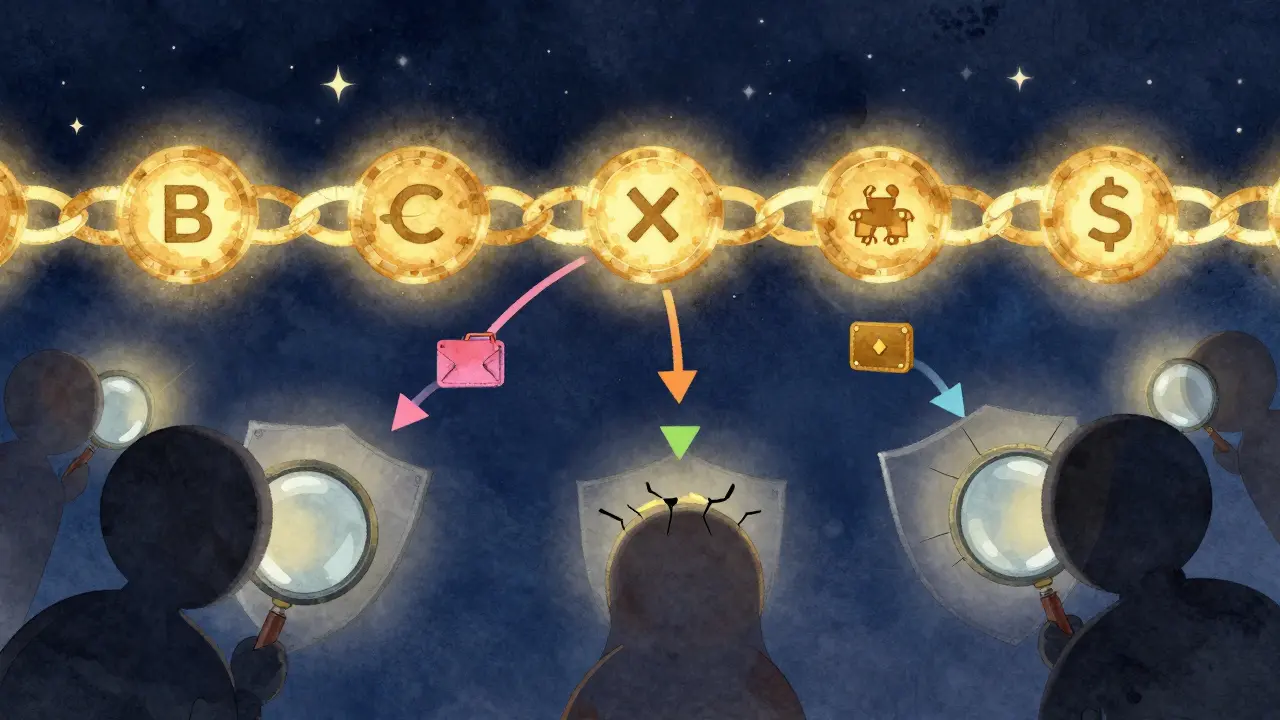
How Authorities Use Blockchain Forensics to Detect Crypto Sanctions Evasion
Authorities use blockchain forensics to trace crypto transactions, detect sanctions evasion, and freeze illicit funds. Tools now identify complex laundering patterns across chains, making crypto less anonymous than ever.