Digital Identity Privacy: Protect Your Online Identity in Crypto and Blockchain
When you use crypto, trade NFTs, or join a DeFi protocol, you’re not just sending money—you’re leaving behind a digital identity, a traceable record of your actions on public blockchains. Also known as on-chain identity, it’s not anonymous by default. Every wallet address, transaction, and interaction is publicly visible, and with the right tools, someone can link it back to your real name, location, or device. This isn’t science fiction. In 2024, Chainalysis and other firms routinely track crypto flows to identify users involved in scams, tax evasion, or sanctions violations. If you’re using crypto, your digital identity is already out there—unless you take steps to protect it.
That’s where decentralized identity, a user-controlled system that lets you prove who you are without revealing unnecessary details. Also known as DID, it’s built on standards like Verifiable Credentials and works with zero-knowledge proofs to keep your data private while still being verifiable. Think of it like showing a driver’s license to prove you’re over 21, but not showing your home address, Social Security number, or photo. Projects like Polygon ID and Civic are building this tech, and it’s starting to show up in crypto onboarding, airdrops, and KYC processes. But here’s the catch: most users still rely on centralized exchanges that collect your ID, phone number, and face scan. That’s not privacy—that’s trading one form of surveillance for another.
Real digital identity privacy means you control what’s shared, when, and with whom. It’s not about hiding illegal activity—it’s about protecting your right to financial freedom without constant monitoring. In countries like Ecuador and Myanmar, where crypto use is restricted or monitored, this isn’t optional—it’s essential. Even in places like Switzerland, where regulations are clear, you still want to avoid being tracked by advertisers, data brokers, or hackers who target wallet holders.
You’ll find posts here that dig into real cases: how people lost money because their wallet was linked to their social media, how meme coins like WOLF and CJ coin became targets for identity harvesting, and how platforms like Arch Network and SpireX handle user data. Some guides show you how to use mixers, privacy coins, or burner wallets. Others warn you about fake airdrops that steal your identity under the guise of free tokens. This isn’t about paranoia. It’s about awareness. The tools exist. The knowledge is here. The question is: are you ready to take control of who sees your digital footprint?
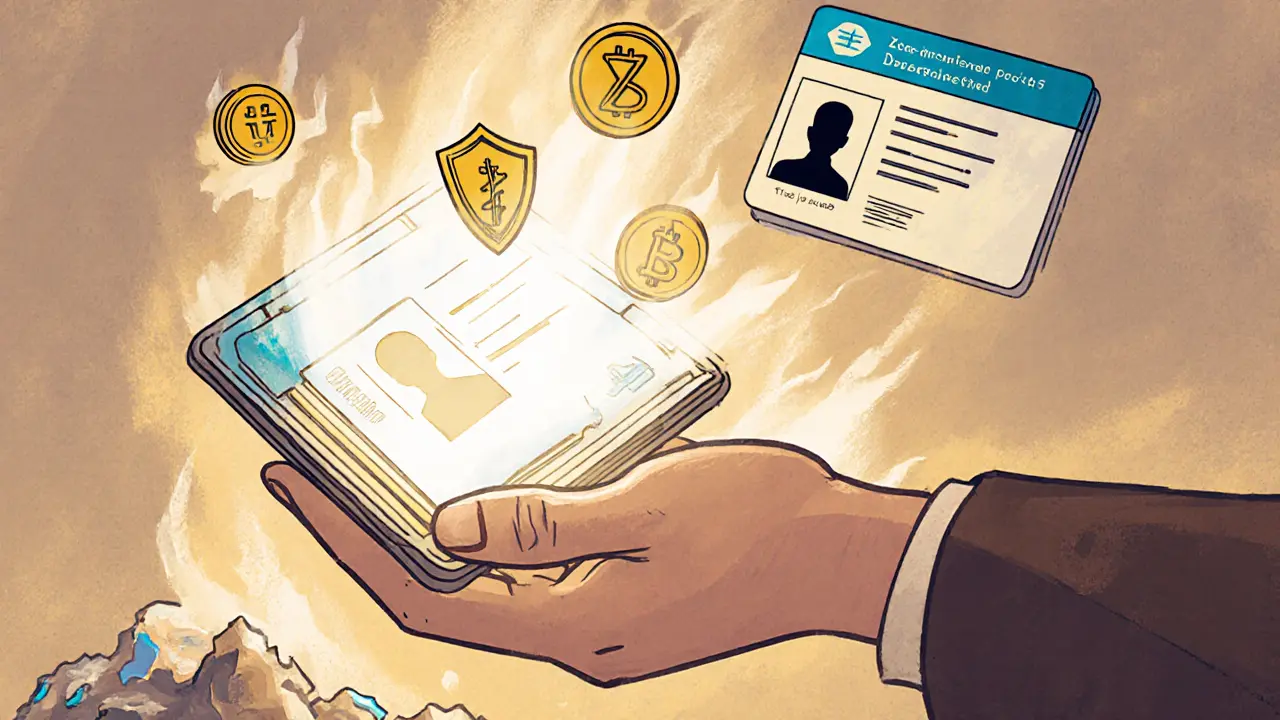
Privacy-Preserving Identity Verification: How Blockchain Keeps Your Data Safe
Privacy-preserving identity verification uses blockchain and cryptography to prove who you are without revealing your personal data. Learn how zero-knowledge proofs and decentralized IDs are replacing traditional ID checks.