Auditability in Blockchain: How Transparency Builds Trust in Crypto
When we talk about auditability blockchain, the ability to trace and verify every transaction on a public ledger in real time. It’s not just a technical feature—it’s the reason some crypto projects survive while others vanish overnight. Unlike traditional banking, where records are locked behind passwords and paperwork, blockchain lets anyone check who sent what, when, and to whom. This openness is what makes it possible for regulators to catch money launderers, for investors to spot fake tokens, and for users to know if a platform is actually doing what it claims.
That’s why blockchain forensics, the practice of analyzing on-chain data to detect suspicious activity has become a critical tool for governments and exchanges alike. Tools now track cross-chain swaps, mixers, and wallet clusters to find hidden flows of stolen funds. Projects like Humanode and Millionero get attention not just for their tech, but because they either embrace this transparency—or hide from it. And when a token like SHREW or OKFLY disappears without a trace, the blockchain doesn’t lie. The trail is still there, frozen in time, proving no one ever delivered on their promises.
on-chain data, the raw, immutable record of every transaction across a blockchain network is what turns guesswork into facts. If a DEX like Omni Exchange V3 or NinjaSwap has no public audit, you can’t verify its code. If a token has zero circulating supply like UZX’s, the numbers don’t match the hype. And when a project claims to be "MiCA-compliant" like Millionero, auditability is the only way to prove it. That’s why the most trusted platforms don’t just say they’re secure—they show you how.
What you’ll find below isn’t a list of random crypto stories. It’s a collection of real cases where auditability made the difference—between a scam and a solution, between a dead token and a living network. Some posts show how authorities used blockchain forensics to freeze sanctions-busting wallets. Others expose airdrops that never happened, where the only audit was the blockchain itself, showing zero tokens ever moved. There are reviews of exchanges that skip audits and pay for it in lost trust. And there are deep dives into how encryption and identity verification tools make auditability possible without sacrificing privacy. This isn’t theory. It’s what’s already happened. And it’s what you need to know before you invest, trade, or even click on the next "free token" offer.
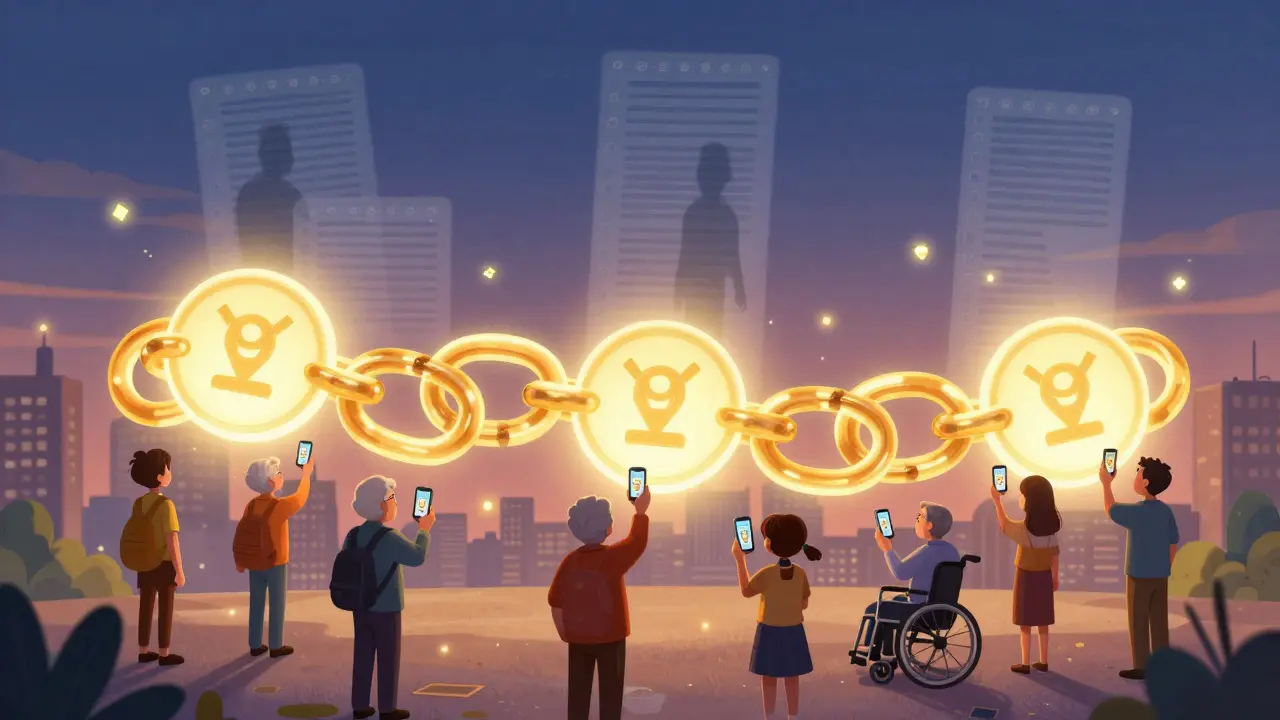
Transparency and Auditability in Blockchain Voting: How It Works and Why It Matters
Blockchain voting uses cryptography and decentralization to make elections transparent and auditable. Every vote is publicly verifiable, tamper-proof, and private. Real pilots in West Virginia and Estonia show it works.