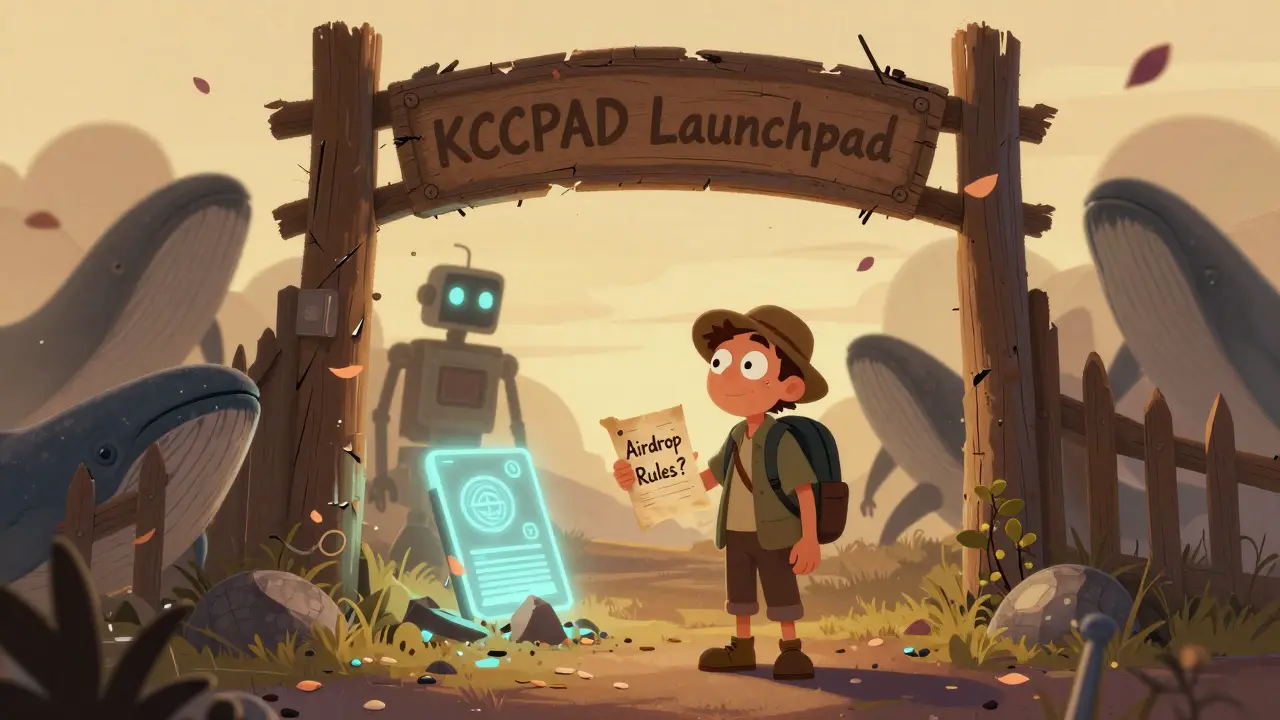
Back in July 2021, a small crypto project called KCCPAD dropped a quiet announcement: The People’s Launchpad was going live. No big marketing blitz. No celebrity influencers. Just a $25,000 market cap, a fair launch, and a promise to let regular people in on early-stage crypto projects. But what happened to that airdrop? Did anyone actually get tokens? And is there anything left to claim today?
If you’re asking these questions now - in February 2026 - you’re not alone. Many people still search for KCCPAD details, hoping to find a forgotten wallet full of tokens. The truth? There’s almost no public record left. No whitepaper. No active website. No Discord. Just scattered forum posts and old tweets that barely make sense.
What Was KCCPAD Supposed to Do?
KCCPAD wasn’t trying to be the next Binance Launchpad. It was smaller. Quieter. Designed for people who couldn’t afford to buy $10,000 worth of tokens just to get a shot at a new coin. It called itself The People’s Launchpad because it claimed to skip the usual tiered system where only big holders get guaranteed access.
Instead, KCCPAD said it used anti-bot protection to stop whales and automated scripts from snatching up all the tokens. That sounds nice, right? But here’s the catch: no one ever saw proof of how it worked. No screenshots. No smart contract audits. No public logs of who participated and how many tokens they got.
The project was built on the KuCoin Community Chain (KCC), which was still relatively new back then. KCC was trying to compete with BSC by offering low fees and fast transactions. KCCPAD rode that wave, promising to list new projects on KCC first - before they hit bigger platforms. The idea was simple: join KCCPAD early, get early access to vetted projects, and maybe cash in before everyone else.
The Airdrop: No Details, No Transparency
Here’s where things get fuzzy. KCCPAD said there was an airdrop. But nobody ever published the rules.
- How many tokens were distributed?
- Who qualified? Did you need to hold KCC? Follow them on Twitter? Join Telegram?
- When could you claim them?
- Was there a vesting schedule?
No answers. Not even a FAQ page. If you didn’t screenshot the announcement at the exact moment it dropped, you had no chance of knowing what to do next.
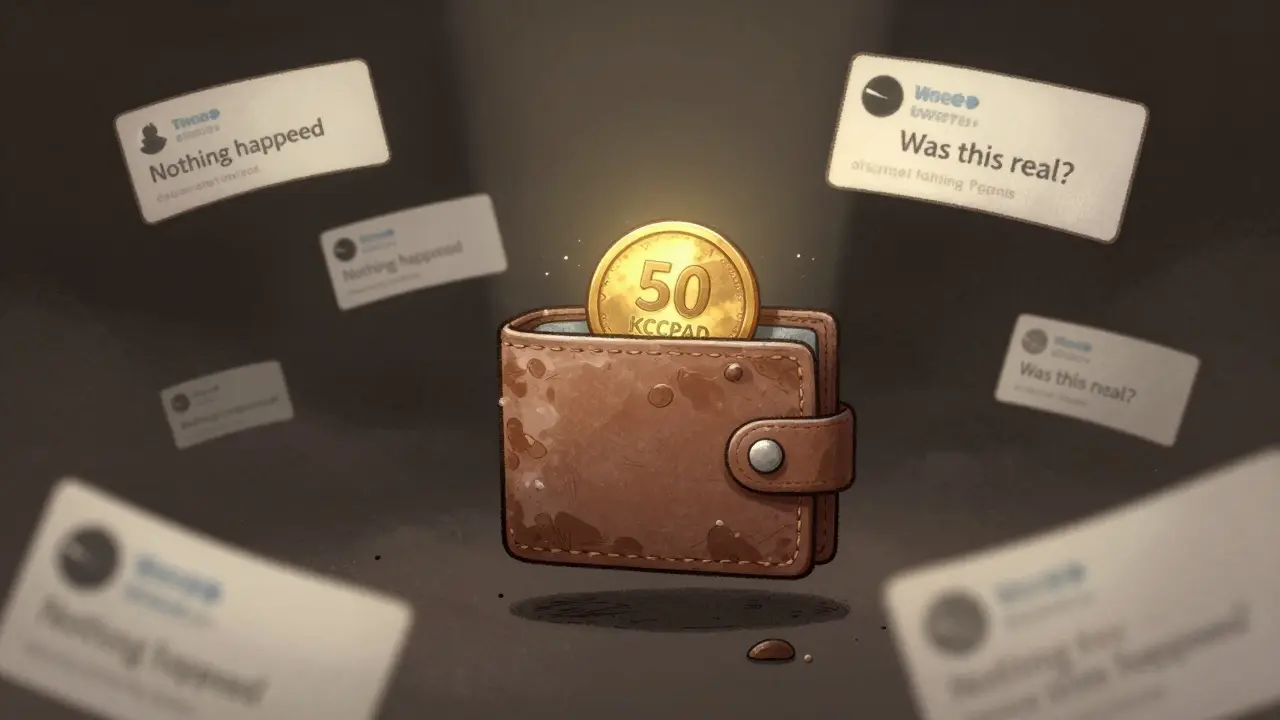
Some users claimed they received 50 KCCPAD tokens. Others said they got nothing. One Reddit user from Manila posted in August 2021: "I signed up, connected my wallet, waited 72 hours. Nothing. Checked my KCC balance 10 times. Still zero. Was this a scam?" No one from KCCPAD ever replied.
That’s not unusual for tiny launchpads. Many of them launch, collect a few hundred users, then vanish. No refunds. No explanations. Just silence. KCCPAD was no different.
How Crypto Launchpads Usually Work (And Why KCCPAD Didn’t)
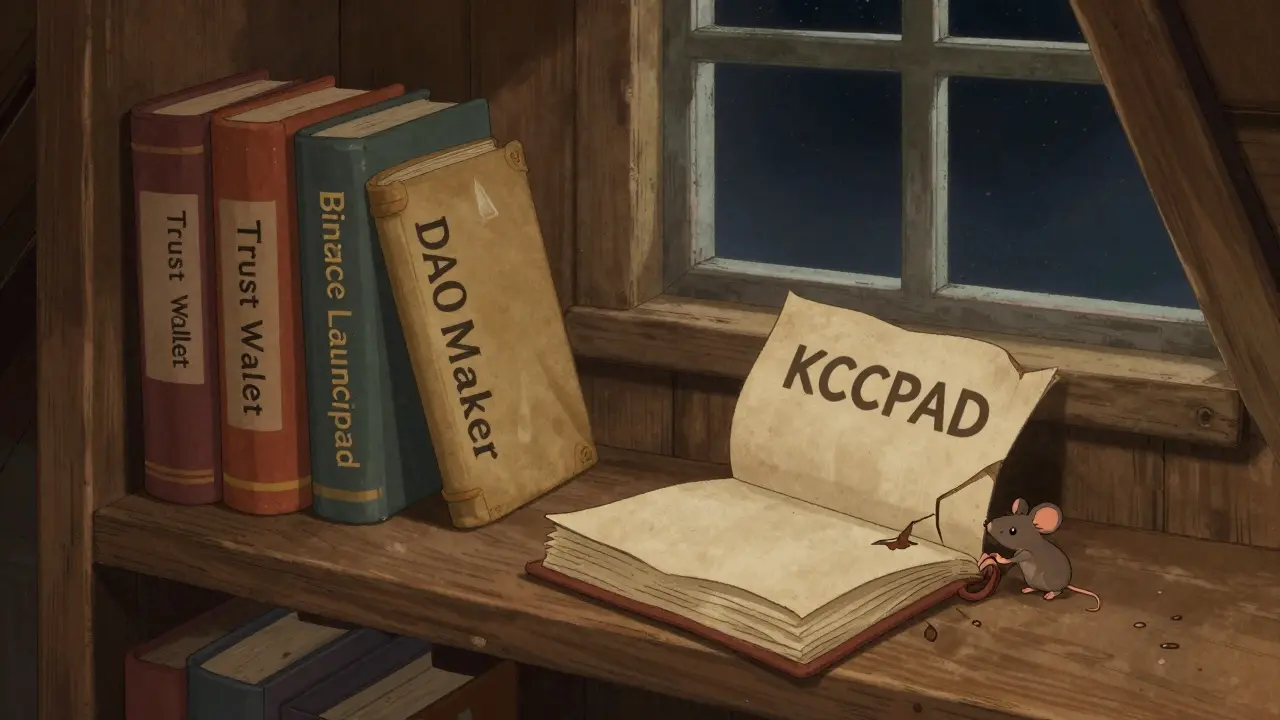
Most successful launchpads - like Trust Wallet Launchpad or DAO Maker - have clear rules. You stake a certain amount of their token. You get a tier. Tier 1 gets 5% of the allocation. Tier 2 gets 1%. Tier 3 gets a lottery ticket.
KCCPAD claimed to avoid this. They said everyone got an equal shot. But without on-chain verification, that claim meant nothing. No one could prove they were treated fairly. No one could prove they even got their tokens.
Compare that to Fundraise Launchpad, which gave 50 FRLP tokens (about $7 at the time) to the first 2,000 people who signed up. They posted the transaction IDs. They linked the wallet addresses. They made it public. KCCPAD didn’t do any of that.
That’s why KCCPAD failed. Not because it was a scam - though some thought so - but because it didn’t build trust. Crypto doesn’t work without transparency. You can’t say "we’re for the people" and then disappear without a trace.
What Happened to KCCPAD After the Launch?
The project went live on July 12, 2021. The initial token sale raised around $22,000 - close to the $25,000 target. That’s it.
Within three weeks, the website became a 404 error. The Twitter account stopped posting. The Telegram group had 12 active members, then 3, then 0. By November 2021, the token price on decentralized exchanges dropped to $0.000001. Today, it’s not even listed anywhere.
There’s no record of a team. No LinkedIn profiles. No GitHub commits. No audits from CertiK or Hacken. Nothing. It was a ghost project.
Could You Still Claim KCCPAD Tokens Today?
Technically, maybe. If you had a wallet that participated back in July 2021, you could still check your KCC balance on a block explorer like KCCScan.
But here’s the reality:
- You’d need to know the exact contract address - and no one published it officially.
- You’d need to remember which wallet you used - most people didn’t.
- You’d need to manually interact with a smart contract that hasn’t been maintained in over four years.
- Even if you got the tokens, they’re worth less than a cent. Not even enough to cover the gas fee to move them.
So no - you can’t claim anything meaningful today. The airdrop is dead. The project is gone. The tokens are worthless.
Lessons from the KCCPAD Airdrop
This isn’t just a story about a failed project. It’s a lesson for anyone chasing crypto airdrops.
First: Never trust a project that doesn’t publish clear rules. If they say "join now" but won’t tell you how, why, or what you’ll get - walk away.
Second: Check for on-chain proof. If a launchpad says you got tokens, show me the transaction. Show me the contract. Show me the timestamp. If they can’t, they’re not real.
Third: Small projects die fast. A $25,000 market cap doesn’t mean "underdog." It means "no funding." It means "no team." It means "no future."
There are hundreds of launchpads every year. Most vanish within months. A few survive. Only one or two become big. KCCPAD wasn’t one of them.
What Should You Do Now?
If you think you might have participated in KCCPAD:
- Check your old KCC wallet addresses on KCCScan (search for any token transfers around July 2021).
- If you see KCCPAD tokens, note the amount. But don’t waste time trying to sell them - no exchange will list them.
- If you see nothing? You didn’t get anything. Move on.
If you’re looking for real airdrops today:
- Stick to well-known platforms: Binance, Coinbase, KuCoin, or established DeFi protocols like Uniswap or Aave.
- Always read the official announcement - not a tweet or a meme.
- Never send ETH or tokens to claim an airdrop. Legit projects never ask for that.
KCCPAD taught us one thing: in crypto, silence isn’t mystery. It’s abandonment.
Did KCCPAD really give out tokens during its airdrop?
Some users reported receiving small amounts of KCCPAD tokens - often around 50 tokens - but there’s no official record of who got what. Without published smart contract logs or wallet lists, it’s impossible to verify. Most participants never saw the tokens appear in their wallets, and those who did found them worth less than a cent after the project collapsed.
Can I still claim KCCPAD tokens today?
Technically, yes - if you still have the wallet you used in July 2021 and you know the contract address. But practically? No. The contract is inactive, the token has no value, and no exchange supports it. Even if you find the tokens, the gas fee to move them will cost more than they’re worth. The airdrop is long over.
Was KCCPAD a scam?
It wasn’t a classic scam like rug pulls where developers steal funds. KCCPAD raised $22,000 and launched a token. But it failed to deliver on its promises: no transparency, no communication, no updates. It disappeared without explanation. In crypto, that’s functionally the same as a scam. Trust is everything - and KCCPAD broke it.
Why did KCCPAD fail when other launchpads succeeded?
KCCPAD lacked three things: a public team, clear rules, and ongoing communication. Successful launchpads like Binance Launchpad show you exactly how to qualify, how many tokens you’ll get, and when you can claim them. KCCPAD did none of that. It relied on hype, not structure. In crypto, hype dies fast.
Is KCCPAD still active in 2026?
No. The website has been offline since late 2021. Social media accounts are abandoned. The token isn’t listed on any major exchange. No developers have posted updates. The project is dead. Any site claiming to offer KCCPAD tokens today is likely a phishing page or a scam.


blake blackner
February 14, 2026 AT 04:18Elizabeth Choe
February 14, 2026 AT 18:39Elijah Young
February 15, 2026 AT 16:20Ekaterina Sergeevna
February 16, 2026 AT 17:08Andrea Atzori
February 16, 2026 AT 21:23kelvin joseph-kanyin
February 17, 2026 AT 13:45Grace Mugambi
February 19, 2026 AT 02:55Crystal McCoun
February 20, 2026 AT 19:45Donna Patters
February 21, 2026 AT 14:44monique mannino
February 22, 2026 AT 23:21Peggi shabaaz
February 23, 2026 AT 02:02Robbi Hess
February 23, 2026 AT 20:02Keturah Hudson
February 24, 2026 AT 15:22Brittany Meadows
February 24, 2026 AT 15:43Desiree Foo
February 25, 2026 AT 22:15John Doyle
February 26, 2026 AT 12:26Michelle Cochran
February 28, 2026 AT 11:16