
Imagine a thief who doesn’t just hide stolen cash in a safe but shuffles it through dozens of different banks, currencies, and countries in seconds. That is exactly what the Lazarus Group, the primary cyber warfare unit of the Democratic People's Republic of Korea (DPRK), has been doing with cryptocurrency. For years, sanctions have tried to choke off North Korea’s funding for its weapons programs. But instead of stopping, these state-sponsored hackers have evolved. They are now using complex cross-chain techniques to launder billions of dollars, turning the very transparency of blockchain into a fog of war that makes tracking nearly impossible.
This isn't just about lost money; it is a direct threat to global security. When you understand how these hackers move funds across different blockchains, you see why traditional restrictions are failing. The shift from simple mixing services to sophisticated cross-chain bridges represents a massive leap in financial obfuscation. If you are an investor, a compliance officer, or just someone concerned about the stability of the digital asset ecosystem, understanding this evolution is critical. Here is how DPRK hackers are bypassing restrictions and what it means for the future of crypto security.
The Shift from Mixers to Cross-Chains
To understand the current threat, we first need to look at what changed. In the past, North Korean hackers relied heavily on privacy coins and centralized mixing services like Tornado Cash or Wasabi Wallet. These tools worked by pooling funds together and sending them out in a scrambled order, breaking the link between the sender and the receiver. However, as regulatory pressure mounted and entities like Tornado Cash were sanctioned, this method became risky and slow.
Around 2022 and 2023, the strategy shifted dramatically. The Lazarus Group began exploiting cross-chain bridges, which are protocols that allow assets to move between different blockchain networks. Instead of hiding money in one place, they started hopping between chains. Data from Elliptic shows that the Lazarus Group drove an 111% surge in funds processed through these conversion services. By moving stolen Ethereum to Bitcoin, or Tron tokens to Binance Smart Chain, they create a trail that is fragmented across multiple ledgers. This fragmentation forces investigators to piece together puzzles from several different databases, buying the hackers valuable time.
Anatomy of a Modern Heist: The Bybit Case Study
The scale of this operation became undeniable with the Bybit heist in February 2025. Attributed to TraderTraitor, a subunit of the DPRK’s Reconnaissance General Bureau (RGB), this single attack stole over $1.5 billion, making it the largest crypto theft in history. What made this incident particularly revealing was not just the amount, but the method used to launder the proceeds.
Following the breach, investigators traced a chaotic web of transactions. The stolen Ethereum was not simply moved to a cold wallet. Instead, it underwent multiple rounds of swapping. Portions were routed through Binance Smart Chain and Solana, while the majority was converted directly into Bitcoin. TRM Labs identified specific bridges like the Avalanche Bridge and Ren Bridge being used extensively. In one instance, more than 9,500 BTC were deposited through the Avalanche Bridge alone. This rapid movement across Bitcoin, Ethereum, BitTorrent Chain (BTTC), and Tron networks demonstrates a high degree of automation and pre-planning.
| Year | Total Stolen (USD) | Number of Incidents | Primary Target Type |
|---|---|---|---|
| 2023 | $660.5 Million | 20 | Centralized Exchanges |
| 2024 | $1.34 Billion | 47 | Exchanges & DeFi Protocols |
| 2025 | Over $2 Billion | N/A (Escalating) | Exchanges & High-Net-Worth Individuals |
The "Flood the Zone" Technique
One of the most effective tactics employed by these hackers is known as "flooding the zone." Nick Carlsen, a North Korea expert at TRM Labs, describes this as overwhelming compliance teams and law enforcement with sheer volume. Instead of making a few large, suspicious transfers, the hackers execute thousands of small, rapid transactions across multiple platforms simultaneously.
This technique exploits the limitations of human review processes. Automated systems might flag some transactions, but the speed and complexity of cross-chain swaps mean that by the time an alert is raised, the funds have already moved three or four times. The goal is not just anonymity but confusion. By creating noise, they make it statistically difficult to distinguish illicit flows from legitimate market activity. This approach requires significant computational power and automated software, highlighting the industrial nature of these operations.

Why Restrictions Are Failing
You might wonder why existing sanctions haven’t stopped this bleeding. The answer lies in the decentralized nature of the tools being used. Traditional banking restrictions rely on cutting off access to the SWIFT network or freezing accounts at regulated institutions. In the crypto world, especially when using decentralized exchanges (DEXs) and non-custodial bridges, there is no central authority to enforce these blocks.
Furthermore, the use of "obscure blockchains" complicates matters. Many smaller or newer chains lack the robust analytics coverage provided by firms like Chainalysis or TRM Labs. Hackers exploit these blind spots, moving funds to chains where tracking capabilities are diminished before bringing them back to major networks. Additionally, the creation of custom tokens issued directly by laundering networks allows them to trade among themselves without ever touching a public ledger in a recognizable way. This adaptability means that every time regulators close one door, the Lazarus Group finds a window.
The Human Element: A New Attack Vector
While the technical side of cross-chain laundering is impressive, the entry point for many recent attacks has become surprisingly low-tech. Elliptic notes that the weak point in cryptocurrency security is now human, not technological. In 2025, there was a marked pivot toward targeting individuals, particularly high-net-worth holders and company executives.
Instead of trying to hack a secure exchange server, hackers use phishing, fake job offers, and compromised social media accounts to steal private keys. Once they have access to a wallet, the cross-chain machinery kicks in. This shift broadens the attack surface significantly. It means that even if you never interact with a vulnerable exchange, you could still be part of the laundering chain if your credentials are compromised. The sophistication of the laundering process is now matched by the sophistication of the social engineering used to initiate the theft.
The Arms Race: Tracking vs. Hiding
In response to these evolving threats, the blockchain intelligence community has upgraded its tools. TRM Labs introduced cross-chain analytics in 2019 and later launched TRM Phoenix, a solution designed to automatically trace fund flows across bridges. These tools attempt to visualize the entire journey of an asset, regardless of how many chains it hops across.
However, this is an ongoing arms race. As trackers get better, hackers get smarter. The recent use of "refund addresses" to redirect assets to fresh wallets breaks the chain of custody in ways that challenge even advanced algorithms. Moreover, much of the stolen Bitcoin remains stationary after conversion, suggesting that hackers are preparing for large-scale liquidation through over-the-counter (OTC) networks rather than immediate on-chain trading. This patience indicates a long-term strategy focused on eventual fiat conversion outside the visible blockchain layer.
Global Security Implications
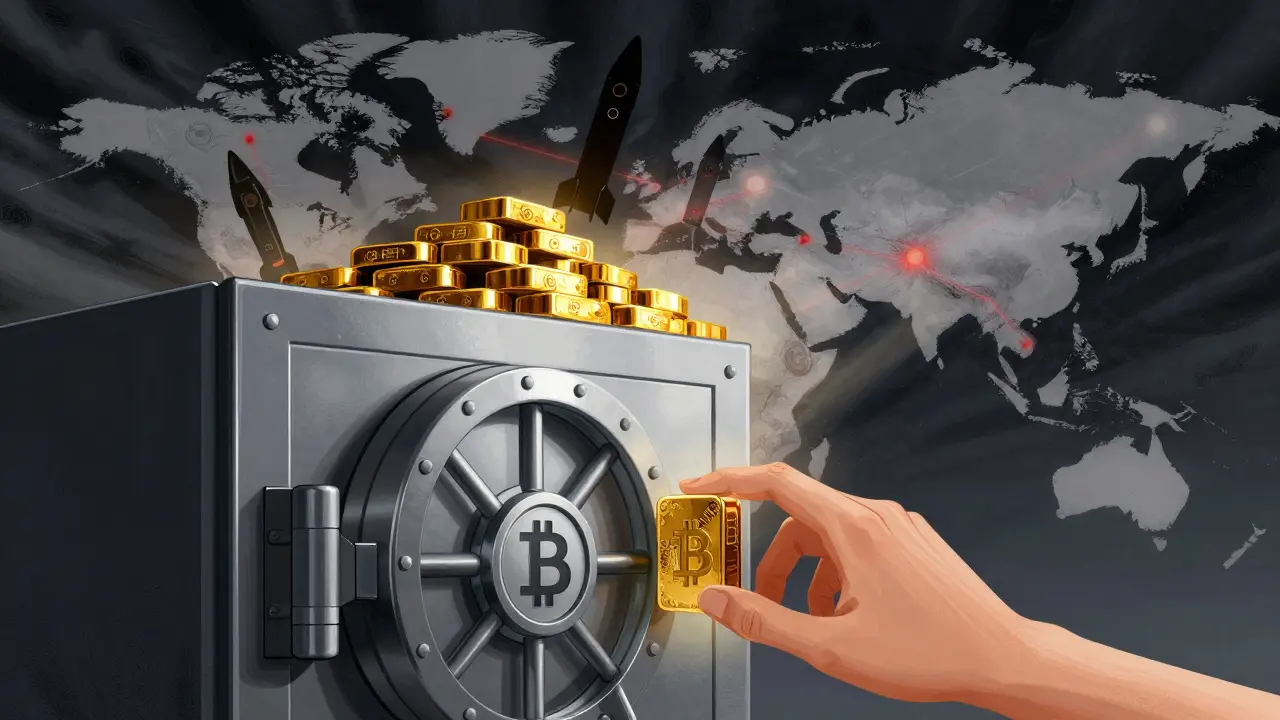
The stakes here extend far beyond the crypto industry. A UN report highlighted that the DPRK’s weapons program is largely funded by these cyber operations. With approximately 50% of the regime’s foreign-currency earnings coming from cybercrime, every dollar laundered contributes to nuclear proliferation and missile development. The Wilson Center emphasizes that this is a matter of global security. The progressive escalation from $660 million in 2023 to over $2 billion in 2025 shows that this revenue stream is not just stable; it is growing exponentially.
If left unchecked, this trend normalizes the use of digital assets for state-sponsored terrorism and destabilization. It undermines the integrity of the global financial system and challenges the effectiveness of international sanctions. The ability of a rogue state to extract billions from the global economy without facing physical consequences sets a dangerous precedent for other actors.
What is cross-chain crypto laundering?
Cross-chain crypto laundering is a technique where stolen cryptocurrency is moved across multiple different blockchain networks (like Ethereum, Bitcoin, and Tron) using bridge protocols. This fragmentation makes it difficult for investigators to trace the origin and destination of the funds, as they must analyze data from several separate ledgers.
Who are the Lazarus Group hackers?
The Lazarus Group is a collective name for various cyber warfare units operated by the Democratic People's Republic of Korea (DPRK). Specifically, they are linked to the 3rd Bureau of the Reconnaissance General Bureau (RGB). They are responsible for some of the largest cryptocurrency heists in history, including the Bybit attack in 2025.
Why did North Korean hackers stop using mixers like Tornado Cash?
Mixers faced increased regulatory scrutiny and sanctions, making them riskier and slower to use. Consequently, DPRK hackers shifted to cross-chain bridges, which offer faster transaction speeds and greater complexity, allowing them to evade detection more effectively in the current regulatory environment.
What is the "flood the zone" technique?
This is a tactic where hackers overwhelm compliance teams and blockchain analysts with a high volume of rapid, small transactions across multiple platforms. The goal is to create enough noise and confusion to delay detection and interdiction efforts while the funds are moved further down the laundering chain.
How does DPRK crypto theft impact global security?
Cybercrime provides a significant portion of the DPRK's foreign currency earnings, which are directly used to fund its nuclear weapons and missile programs. Therefore, successful crypto laundering by these hackers directly contributes to global instability and the proliferation of weapons of mass destruction.
Can blockchain analytics firms track cross-chain movements?
Yes, firms like TRM Labs and Chainalysis have developed specialized tools such as TRM Phoenix to trace funds across different blockchains. However, this is an ongoing arms race, as hackers continuously evolve their methods to exploit gaps in analytics coverage, particularly on obscure or lesser-known chains.







Kenneth Riley
June 12, 2026 AT 15:12you guys really think this is new news? seriously. the lazarus group has been doing this for years and now we are acting surprised that they moved from mixers to bridges. it is pathetic how slow the regulatory bodies are. they sanction tornado cash and then act shocked when the hackers just use a bridge instead. it is like putting a speed bump in front of a tank. the whole crypto space is built on anonymity features that criminals exploit. stop pretending you can police decentralized networks with centralized laws. it never works.
ravi mahla
June 14, 2026 AT 09:15haha wow kenneth you are always so negative lol but yeah the tech is wild. i mean who would have thought moving money between chains could be so complicated yet so easy for bad guys. it is crazy how fast they adapt. one day they use ethereum next day they are on solana and tron. keeps us on our toes i guess! at least we get good stories out of it right?
Mark Brunschwiler
June 15, 2026 AT 11:00the real issue here is not the technology or the hackers or even the sanctions. the real issue is that we have created a world where value can exist without physical form and therefore without accountability. when you remove the body from the transaction you remove the consequence. the lazarus group is just a symptom of a deeper spiritual rot in our financial systems. we want freedom but we also want safety and these two things are mutually exclusive in a digital vacuum. we are chasing ghosts.
Sonya O'Brien
June 17, 2026 AT 02:54i completely agree with mark about the philosophical implications but i think we are missing the practical side of things which is that the human element is actually the weakest link as the article mentioned. it is fascinating to see how social engineering has become more sophisticated than the actual code exploits in many cases. phishing attacks targeting high net worth individuals are becoming incredibly personalized and hard to detect. it makes you wonder if we should be investing more in security awareness training rather than just better blockchain analytics tools because no amount of software can protect against someone clicking a malicious link sent by a trusted contact.
Filbert Reeves
June 17, 2026 AT 17:35typical mainstream narrative trying to blame north korea for everything while ignoring the fact that the entire crypto ecosystem was designed by libertarians who wanted to escape government control. its no surprise that state actors are using it. the fbi and cia probably helped build some of these protocols anyway. everyone knows that the deep state wants to track every penny but they cant do it directly so they let the bad guys launder money through obscure chains to keep the system looking legitimate while they quietly implement cbdc backdoors. wake up sheeple.
Nick Rice
June 19, 2026 AT 12:03filbert you need to calm down with the conspiracy theories. look at the data provided in the table. the escalation from 660 million to over 2 billion is undeniable and it is linked directly to specific groups like tradertraitor. we can discuss the origins of crypto all day but the immediate threat to global security is real. north korea is funding nuclear weapons development with stolen bitcoin. that is a fact supported by un reports and trm labs analysis. we need to focus on solutions not paranoia.
Amit Thakur
June 20, 2026 AT 01:57exactly nick. the technical aspect of cross-chain bridging is what makes this so dangerous for compliance teams. when assets move from eth to btc via avalanche bridge the metadata changes completely. most standard aml tools only track within single chains. the latency in detection allows the funds to be fragmented into thousands of small transactions across multiple dexs before any alert can be triggered. it is an arms race where the attackers have the advantage of speed and obscurity while defenders are bogged down by manual review processes and fragmented data silos.
Eric Scheinberg
June 21, 2026 AT 01:31the methodology employed by the lazarus group demonstrates a high level of operational security and technical proficiency. the utilization of refund addresses to break the chain of custody is particularly insidious as it creates dead ends for forensic analysts. furthermore the shift towards targeting individual wallets via social engineering indicates a strategic pivot away from fortified exchange infrastructure towards softer targets. this approach maximizes return on investment while minimizing the risk of prolonged network intrusion detection.
pankaj chawla
June 21, 2026 AT 11:09eric you are right about the strategy shift. i have seen similar patterns in other cyber crime rings too. they always go for the path of least resistance. hacking a major exchange requires months of preparation and high risk of exposure. stealing keys from a ceo takes minutes and leaves little trace. it is smart criminal behavior unfortunately. we need to educate users better about hardware wallet security and multi-sig setups to reduce this attack surface.
Jessica Lane
June 22, 2026 AT 10:24i am really concerned about the impact on ordinary investors though. when billions are stolen and laundered through these complex channels it erodes trust in the entire market. people start to question if their assets are truly safe. the article mentions that much of the stolen bitcoin remains stationary waiting for otc liquidation. this suggests that there might be large dumps coming in the future which could crash prices. how do regular people protect themselves from such systemic risks?
Charles Pawlikowski
June 22, 2026 AT 13:59well jessica the answer is simple. stop trusting foreign entities and shady crypto platforms. this is why america needs stricter regulations on all digital assets. let them play in their sandbox but if they touch our dollar or our citizens money they follow our rules. the lazarus group is a direct threat to national security and we should treat it like terrorism not just white collar crime. shame on the regulators for being so soft on these tech companies.
Andrea Burd
June 23, 2026 AT 09:30charles you sound like a politician. nobody cares about your patriotic ranting. the reality is that crypto is garbage and always will be. it is a casino for idiots and a money laundering tool for dictators. i wish people would just stick to gold or real estate. all this blockchain nonsense is just hype to sell worthless tokens. typical american ignorance.
Akeem Whittaker
June 24, 2026 AT 14:32andrea please refrain from name calling. while it is true that crypto has speculative elements it also offers genuine innovation in financial inclusion and transparency. dismissing the entire industry as garbage ignores the underlying technology improvements. the challenge we face is balancing innovation with security. we need constructive dialogue not elitist disdain. let us focus on how to improve compliance frameworks rather than tearing down the medium itself.
Manish Prajapat
June 26, 2026 AT 02:50akeem is correct. the debate should be about governance models. the current laissez-faire approach has allowed malicious actors to thrive. however banning technology is futile as history shows. we must develop smarter contracts and better interoperability standards that include built-in compliance hooks. perhaps zero-knowledge proofs can help verify legitimacy without revealing sensitive data. it is a complex puzzle but solvable if we work together.
John Doe
June 26, 2026 AT 21:47it is terrifying to think that half of north koreas foreign currency comes from cybercrime. that means every time you buy something online or check your bank account there is a chance that part of the system is being probed by state-sponsored hackers. the scale of the bybit heist alone is staggering. 1.5 billion dollars gone in seconds. it makes you feel vulnerable knowing that your digital identity is constantly under siege by professionals who are well funded and motivated.
Mekz Wheoki
June 28, 2026 AT 14:19oh great another doom post. thanks for ruining my morning john. i suppose we should all just delete our computers and live in caves now. the world is ending because some hackers stole some magic internet money. hilarious. meanwhile the rest of us are trying to pay rent and deal with inflation caused by actual governments printing real money. but sure lets worry about the lazarus group instead of our own central banks.