
You might know him as the undisputed heavyweight champion who knocked out Tyson Fury and Anthony Joshua. But Oleksandr Usyk is also the face of a new digital asset called Ready to Fight (RTF), a cryptocurrency designed to shake up the $10 billion global boxing industry. If you’ve seen RTF trending on price trackers or heard whispers about a "boxing coin," you’re probably wondering: Is this just another hype-driven meme token, or does it have real utility? As of September 2026, RTF sits firmly in the micro-cap category, trading for fractions of a cent with daily volumes that are modest but active. This article breaks down exactly what RTF is, how its ecosystem works, and whether the partnership with major boxing bodies like the WBC and Riyadh Season gives it legs beyond the ring.
The Core Concept: A Digital Back Office for Boxing
At its heart, Ready to Fight is not just a currency; it’s the native token of a SocialFi platform aimed at digitizing the boxing world. Think of it as a "boxing office in your pocket." The project launched in 2024 with a clear mission: connect fighters, promoters, managers, gyms, and fans into a single Web3 ecosystem. Instead of relying on fragmented emails, phone calls, and traditional banking delays, the RTF app aims to streamline matchmaking, contract negotiations, and payments.
The value proposition relies heavily on institutional backing. Unlike many crypto projects born purely from code, RTF has secured partnerships with heavyweights in the sport. It is powered by the World Boxing Council (WBC) and operates in strategic collaboration with Riyadh Season and the Saudi Arabian Boxing Federation. This isn't just branding; these entities represent significant financial muscle and regulatory influence in the current boxing landscape. The goal is to onboard a community estimated at over 50 million participants and fans, turning passive viewers into active stakeholders through token-based engagement.
Tokenomics and Market Reality
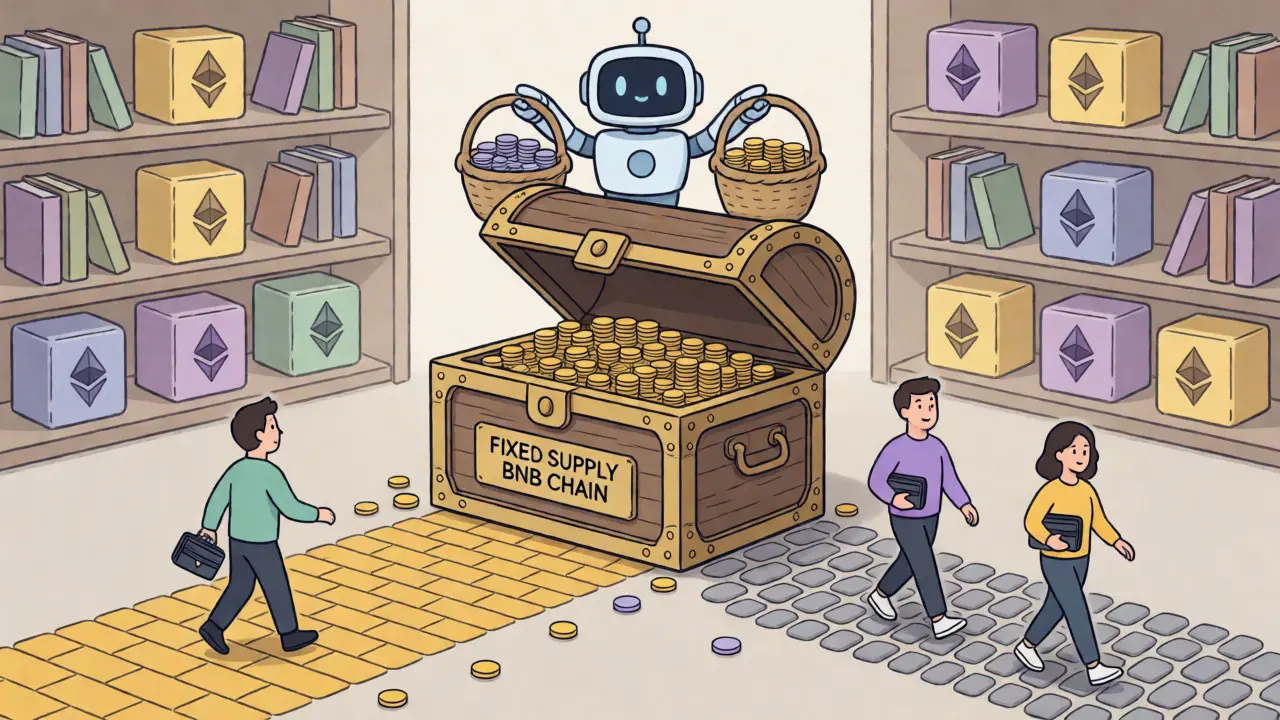
If you’re looking to buy, you need to understand the numbers. RTF has a fixed maximum supply of 400,000,000 tokens. There is no inflation mechanism here; once those tokens exist, that’s it. As of late August 2026, the circulating supply was reported around 316.5 million, though some exchanges list it differently due to verification delays. This puts the fully diluted valuation (FDV) near $1.1 million, classifying it strictly as a micro-cap asset.
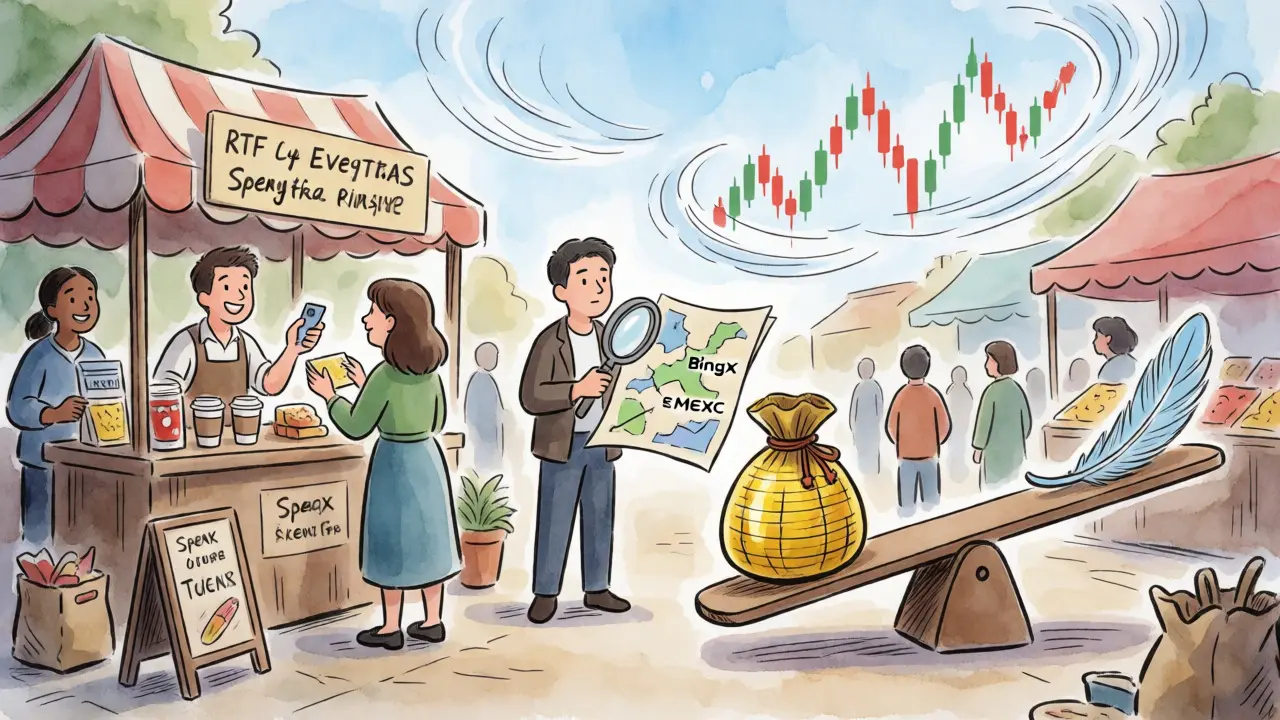
Price volatility is the name of the game. In March 2025, RTF traded near $0.0115. By September 2026, it had settled around $0.0027-$0.0028. That’s a decline of roughly 76% over 18 months. While algorithmic forecasts suggest potential upside-some models predict a rise to $0.067 within a year-these are speculative projections based on historical volatility, not guaranteed outcomes. The market cap hovers under $900,000 according to CoinMarketCap, meaning small trades can move the price significantly. You aren’t dealing with Bitcoin-level liquidity here; slippage is a real risk if you try to enter or exit large positions quickly.
Technical Architecture: Multi-Chain Flexibility
Technically, RTF is an EVM-compatible token. It started life on the BNB Smart Chain as a BEP-20 token, leveraging low transaction fees and fast settlement times ideal for frequent micro-transactions. However, the developers didn’t stop there. They deployed the same contract address (0xa89e...5440d4) on Ethereum as well. This multi-chain strategy ensures broader accessibility, allowing users holding ETH or BNB to interact with the ecosystem without complex bridging processes.
For wallet users, integration is straightforward. Standard wallets like MetaMask and Binance Web3 Wallet support RTF natively because it adheres to standard ERC-20/BEP-20 protocols. You don’t need a specialized hardware setup to hold it. Just import the contract address, and you’re good to go. This technical simplicity lowers the barrier to entry for non-crypto-native boxers or fans who might be intimidated by more complex blockchain infrastructures.
Utility Beyond Speculation: How RTF Works
Critics often ask, "Does anyone actually use this token?" The Ready to Fight team argues yes, by embedding RTF into specific functional workflows:
- Matchmaking and Deals: Fighters and promoters can use the app to find opponents and negotiate terms. RTF serves as a medium for deposits or escrow-like guarantees, reducing counterparty risk.
- Fan Engagement via Predictions: The platform features a "risk-free predictions" module. Users stake RTF on fight outcomes. If you lose, your tokens aren’t slashed; they are simply frozen until the event concludes and then returned. Correct predictions earn rewards, creating a gamified loop that keeps holders engaged.
- Crypto Card Integration: Perhaps the most tangible utility is the planned Telegram-integrated crypto card. This allows users to spend RTF balances for everyday purchases, effectively converting crypto holdings into fiat currency at the point of sale. It bridges the gap between digital speculation and real-world spending power.
- Media and Content Production: Promoters can pay for media support and content creation services using RTF, keeping capital within the ecosystem rather than leaking out to external payment processors.
Where to Buy and Liquidity Challenges
Don’t expect to find RTF on every major exchange’s spot list. As of September 2026, Binance does not offer direct spot trading for RTF on its centralized platform. Instead, access is primarily through decentralized routes or specific centralized exchanges like BingX, MEXC, and WhiteBIT. BingX currently holds the highest volume share.
To buy on Binance, you typically need to use their Web3 Wallet. This involves swapping USDT for RTF directly on-chain. While this bypasses the need for a separate CEX listing, it requires you to manage gas fees and slippage settings manually. For beginners, this adds a layer of complexity compared to one-click credit card purchases available for larger caps like Bitcoin or Ethereum. Always double-check the network you are selecting (BNB Chain vs. Ethereum) to avoid sending funds to the wrong chain.
| Metric | Value / Status |
|---|---|
| Max Supply | 400,000,000 RTF |
| Approx. Price | $0.0027 - $0.0028 USD |
| Networks | BNB Smart Chain, Ethereum |
| Primary Exchanges | BingX, MEXC, WhiteBIT |
| Key Partners | WBC, Riyadh Season, Saudi Arabia Boxing Fed |
| Derivatives Available? | No (Spot only) |
Risks and Red Flags
High reward comes with high risk. RTF is a micro-cap token with daily trading volumes often below $200,000. This thin liquidity means that if the market turns sour, exiting a position could take days or result in significant price impact. Furthermore, there are no derivatives markets for RTF-you cannot short it to hedge against downturns on tracked venues. If the price drops, you’re stuck holding the bag unless you sell at a loss.
Another concern is the lack of publicized user metrics. While the marketing materials boast a potential audience of 50 million, concrete data on active app users, actual transactions processed via RTF, or revenue generated by the platform remains scarce in public reports. Until we see hard data proving that thousands of fighters are actively using the app for deals, much of the value proposition rests on future adoption promises rather than current usage stats.
Final Verdict: Speculative Play with Real World Anchors
Ready to Fight is an interesting experiment in vertical-specific SocialFi. It combines the star power of Oleksandr Usyk with institutional backing from the WBC and Saudi sports authorities. These factors provide a credibility shield that most meme coins lack. However, investors must treat RTF as a high-risk venture. The price action shows significant drawdowns since its inception, and the utility, while innovative, needs time to prove mass adoption. If you believe in the digitization of combat sports and want exposure to a niche sector with blue-chip partners, RTF offers a unique entry point. Just keep your position size small relative to your portfolio, given the inherent volatility of sub-$1 million market cap assets.
Is Ready to Fight (RTF) listed on Coinbase?
No, RTF is not currently listed for direct spot trading on Coinbase. You can track its price on their platform, but to purchase it, you generally need to use other exchanges like BingX, MEXC, or WhiteBIT, or swap it via a Web3 wallet connected to the BNB Smart Chain or Ethereum.
Who backs the Ready to Fight project?
The project is led by unified heavyweight champion Oleksandr Usyk. It is powered by the World Boxing Council (WBC) and operates in strategic collaboration with Riyadh Season and the Saudi Arabian Boxing Federation, giving it strong ties to the professional boxing industry.
What is the total supply of RTF tokens?
The maximum supply of Ready to Fight (RTF) is fixed at 400,000,000 tokens. There are no plans for additional minting, making it a deflationary model in terms of issuance, though burn mechanisms may vary.
Can I use RTF to buy things outside of boxing?
Yes, potentially. The ecosystem includes a Telegram-integrated crypto card feature that allows users to spend RTF balances for everyday purchases, similar to how Visa or Mastercard crypto cards work, by converting the token to fiat at the point of sale.
Is RTF a stablecoin?
No, RTF is a volatile utility and speculative token. Its price fluctuates based on market demand, trading volume, and project news. It is not pegged to the US dollar or any other fiat currency.




John Martin
September 4, 2026 AT 11:47Look, I get the hype around Usyk being involved. He's a legend in the ring. 🥊 But let's be real about the tokenomics here. A micro-cap asset with under $1M market cap is basically gambling territory. If you're looking for stable utility, this isn't it. It's a speculative play on whether boxing fans actually want to use a blockchain app instead of just watching YouTube highlights. Keep your position small if you must buy, but don't expect this to moon overnight just because a champion put his face on it. 💸📉
Abid Bhatti
September 6, 2026 AT 06:33It’s all rigged. The WBC partnership? Pure theater. They need new revenue streams because the old guard is dying. This token exists solely to pump bags before the next big fight announcement. You think they care about "digitizing boxing"? Please. It’s a cash grab dressed up in Web3 jargon. Everyone else is sleeping on the fact that volume is low for a reason. Nobody wants this. Wake up.
Paige Ray
September 7, 2026 AT 08:48I appreciate the detailed breakdown. It helps to see both sides of the coin... pun intended. 😌
Maegan Rust
September 8, 2026 AT 06:43This is such a vibrant idea! Imagine connecting gyms and fans directly without the middlemen taking huge cuts. It feels like community building at its finest. 🌟 While the price action is scary, the vision of a 'boxing office in your pocket' is genuinely inspiring. We need more projects that try to solve actual industry fragmentation rather than just creating another meme. Even if it fails, the attempt to bridge traditional sports with digital ownership is beautiful. Let's support innovation even when it stumbles!
Harish Ramaiah
September 8, 2026 AT 09:30Boring!!!😴 Another crypto trying to fix something that isn't broken?? Boxing works fine with Twitter and bank transfers!! Why do we need a token for matchmaking??? It's lazy marketing!!! Usyk is great but the token is meh... 😒💩 Just wait for it to go to zero like everything else...
Rachel Leet
September 8, 2026 AT 21:19The fundamental error in analyzing RTF lies in conflating celebrity endorsement with economic utility. Most participants fail to grasp that liquidity depth is the primary determinant of viability for assets under $1M FDV. When one observes the slippage risks mentioned, it becomes clear that this is not an investment vehicle but a lottery ticket wrapped in institutional branding. The absence of derivatives markets further exacerbates the asymmetric risk profile. True understanding requires recognizing that adoption metrics are lagging indicators, not leading ones.
Indu Nair
September 9, 2026 AT 15:03I love the energy here! ⚡️ Think about the potential! 50 million fans entering the ecosystem could change everything! Yes, the price dropped, but that's just the beginning of the journey! We have WBC backing! We have Usyk! This is historic! Don't let fear stop you from believing in the future of combat sports tech! We are pioneers! Keep holding strong! 🚀🥊❤️
Dominic Jones
September 11, 2026 AT 00:47It is crucial to remember that technical architecture matters. EVM compatibility is good, but multi-chain deployment adds complexity for users who may not understand bridging or network selection. Many beginners will lose funds simply by selecting the wrong chain during swaps. Furthermore, the lack of publicized user metrics is a significant red flag; without transparent data on active addresses or transaction volume, valuation models remain speculative. One should approach this with caution, prioritizing due diligence over narrative momentum.
Sheryl Nelsen Hutton
September 12, 2026 AT 19:48From a socio-economic perspective, the integration of cryptocurrency into traditional sports ecosystems represents a fascinating paradigm shift in how value exchange occurs between stakeholders. However, the current iteration of Ready to Fight appears to suffer from what I term 'premature institutionalization,' where partnerships precede organic user acquisition. The reliance on top-down validation via entities like the WBC may create a false sense of security for retail investors who mistake corporate sponsorship for product-market fit. Until the grassroots engagement metrics demonstrate genuine retention rates among non-speculative users, the token remains largely decoupled from its stated utility functions.
sri harni
September 14, 2026 AT 06:57Not sure why everyone is so angry. It is just a small coin. Some people like boxing. Some people like crypto. Maybe some like both. It is okay to be different. No need to fight about tokens.
Duncan Fisher
September 14, 2026 AT 21:35Hey folks, just wanted to add a quick note on the buying process. Since Binance doesn't list it directly for spot trading, using their Web3 wallet is indeed the most accessible route for many UK/EU users. Just make sure you double-check the contract address (0xa89e...5440d4) every time you swap. It's easy to slip up when dealing with multiple chains. Hope that helps anyone looking to dip their toes in without too much hassle!
adam veikkanen
September 16, 2026 AT 15:33Who cares about the philosophy? Does it pay my rent?
Kathryn Haber
September 18, 2026 AT 13:55i feel like these projects always promise the world then deliver nothing i mean look at the chart its been bleeding since day one nobody is talking about the team wallets dumping quietly while retail buys the dip its sad really
Sonya Kirkwood
September 19, 2026 AT 00:08Can you believe the audacity of claiming 'real utility' when there are no hard numbers? This is exactly what happens when influencers get involved. They sell you a dream, take your money, and leave you holding a bag of worthless tokens. The silence on active user data is deafening. It screams cover-up. I knew it was too good to be true with those big partnerships. Classic misdirection.
Charlotte Richardson
September 20, 2026 AT 16:19It is important to maintain perspective during volatile periods. While the drawdowns are significant, the foundational elements-such as fixed supply and institutional partnerships-provide a structural integrity that many meme coins lack. For those interested in the long-term digitization of sports, this project offers a unique exposure. I encourage all community members to conduct thorough research and manage their risk tolerance accordingly. Patience often yields better results than panic selling.
Rachel Aldaco
September 21, 2026 AT 22:10OMG the drama in the comments section is worse than the actual boxing matches! 😱 Who cares if it goes to zero? At least Usyk is still fighting! Stop acting like you own the blockchain! This token is just a toy for rich people playing sports manager. Grow up! 🙄
Ted Thoroughgood
September 23, 2026 AT 00:00Dont stress to much guys. Its just a game. Buy low sell high. Simple as that. Dont let the charts mess with your head. Stay chill and enjoy the fights. 🥊😎