Chinu (CHINU) isn't a cryptocurrency you hear about on mainstream news. You won't find it in portfolio guides or investment seminars. It's the kind of coin that shows up in late-night Telegram groups promising 100x returns - and then vanishes before you can cash out. If you're wondering what Chinu is, the short answer is: it's a speculative token with almost no substance, built on Solana, and trading at fractions of a cent. But if you dig deeper, you'll see why most experts warn against it - and why people still keep buying it.
What Chinu (CHINU) Actually Is
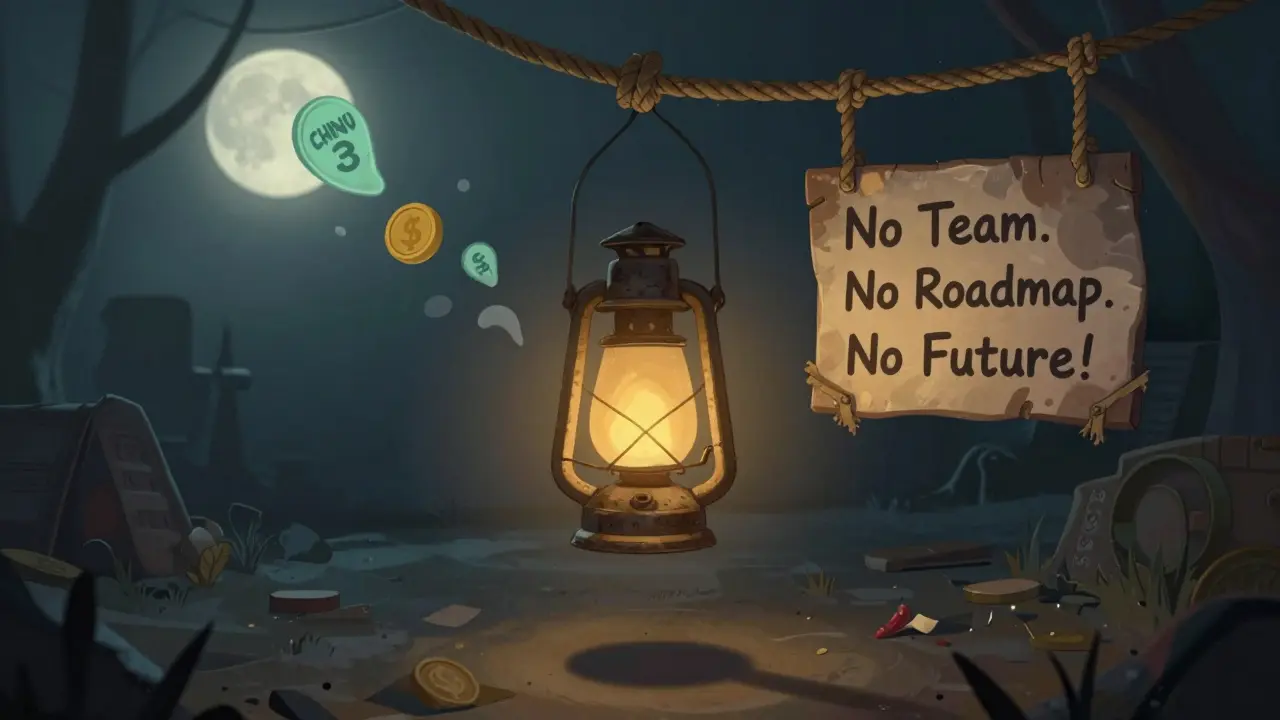
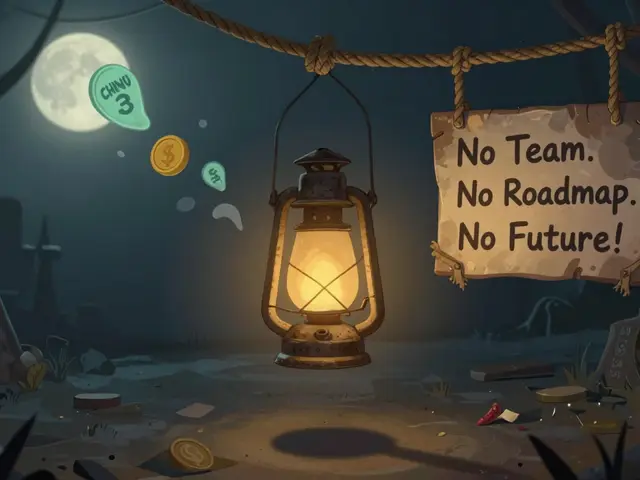
Chinu (CHINU) is a token that lives on the Solana blockchain. Its contract address is FLrgwxXaX8q8ECF18weDf3PLAYorXST5orpY34d8jfbm. That’s all there is to its technical identity. Unlike Bitcoin or Ethereum, there’s no whitepaper, no team, no roadmap, and no official website. No GitHub repository. No developer updates. No public announcements. Just a token with a ticker symbol and a price that jumps around like a pinball.
It’s classified as a meme coin - not because it has a dog or a shiba inu as its mascot, but because it fits the pattern: no utility, no team, no long-term plan. It exists because someone created it, listed it on Binance as "Chinu-sol," and then a few hundred people started trading it. That’s it. There’s no innovation here. No smart contract upgrades. No DeFi integrations. No staking rewards. Just pure speculation.
The Price Isn’t What You Think
On paper, Chinu’s price looks cheap. Around October 2023, different platforms showed wildly different numbers: LiveCoinWatch said $0.000224, CoinMarketCap said $0.000048, and CoinGecko said $0.00004856. That’s not a glitch - it’s a red flag. When prices vary this much across exchanges, it usually means one thing: illiquidity. There’s barely any real trading happening.
Its all-time high was $0.007987 - a number that now feels like a fantasy. By late 2023, it had dropped over 97% from that peak. Over 90 days, it lost 71% of its value. That’s not normal market fluctuation. That’s a collapsing asset. And here’s the kicker: Solana’s transaction fees are fixed at around $0.00025 per swap. That means buying or selling Chinu often costs more in fees than the token itself is worth. You’re literally paying to lose money.
Why No One Can Sell It
One of the most common complaints from users? You can’t sell. Reddit threads are full of stories like this: "I bought $350 worth of CHINU, tried to sell when it dipped, and couldn’t find a buyer for three hours. When I finally did, it dropped another 40% in minutes." That’s not bad luck - that’s a classic pump-and-dump setup.
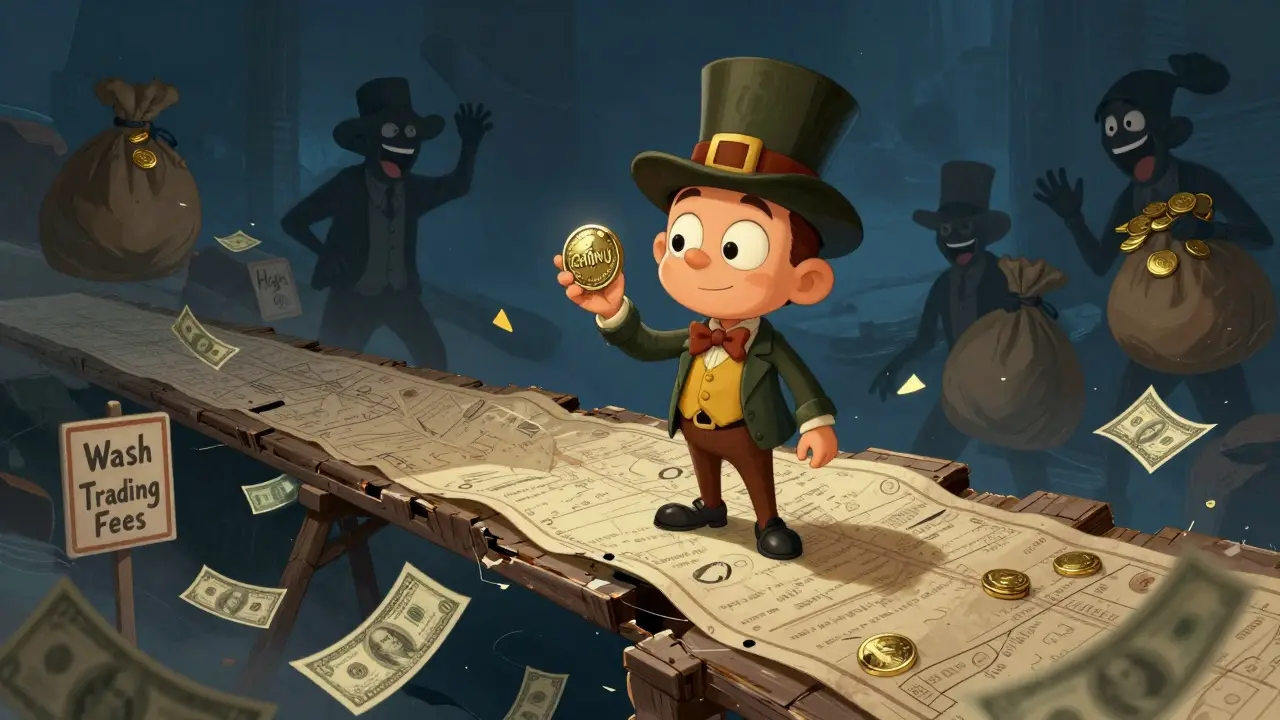
ChainalysisPro, a crypto security researcher, found that 78% of Chinu’s trading volume came from just three wallet addresses. That’s not organic demand. That’s wash trading - where the same people buy and sell between their own wallets to fake activity and lure in new buyers. Once the pump ends, the whales dump their holdings, and everyone else is stuck with worthless tokens because there’s no one left to buy them.
It’s Not Listed Where It Matters
Chinu appears on Binance, but only as a "Chinu-sol" pair. That’s not the same as being listed on major exchanges like Coinbase, Kraken, or Gemini. It’s on the edge - the graveyard of obscure tokens. Binance itself warns users about these kinds of assets. Trustpilot reviews from crypto traders call it "risky tokens with fake volume." Even the Telegram group that supposedly supports it has gone from 50 messages a day in August 2023 to just 8 by October. That’s not a community. That’s a dying echo.
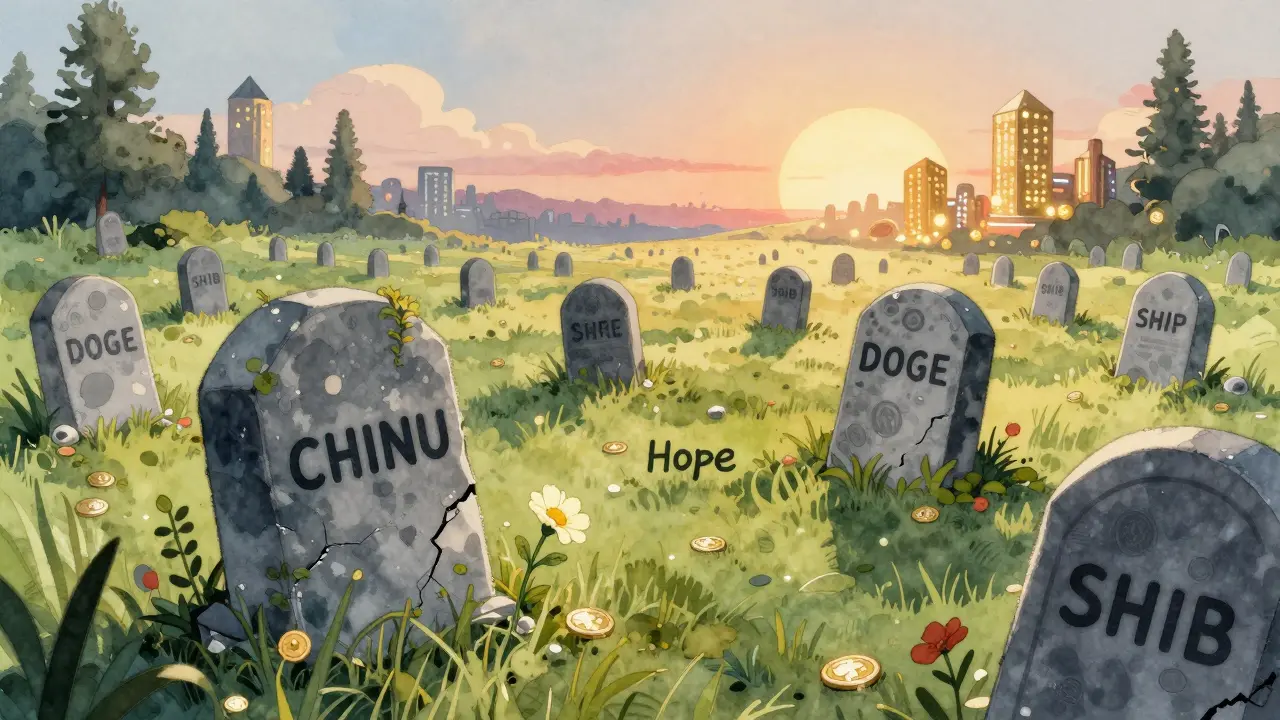
Compare it to Dogecoin or Shiba Inu. Both started as jokes too, but they built real communities, got listed on major exchanges, and even found use cases (like tipping on social media or paying for small services). Chinu has nothing. No partnerships. No adoption. No reason to exist beyond the next pump.
The Regulatory Danger Zone
The SEC has been cracking down on low-priced tokens since September 2023. In their official warnings, they specifically called out tokens under $0.001 - exactly Chinu’s range - as potential unregistered securities. Under the Howey Test, if a token is sold with the expectation of profit based on others’ efforts (like a team or a marketing campaign), it can be classified as a security - even if it’s called a meme coin.
Chinu has no team. No company. No legal entity. That makes it a perfect target for regulators. If the SEC ever decides to go after a low-cap token for fraud or market manipulation, Chinu is exactly the kind they’d pick. And if it gets delisted or frozen, your entire investment disappears overnight.
Who Still Buys Chinu?
People buy it for one reason: the hope of a 100x. They see the price at $0.000048 and think, "If it goes to $0.0048, I’m rich." But here’s the math: for Chinu to rise 100x, it would need a market cap of over $1 billion. That’s more than 100 times the entire market cap of all tokens ranked below #2000 combined. It’s mathematically impossible without a massive, coordinated, and illegal pump.
The real users? They’re not investors. They’re gamblers. They treat it like a lottery ticket. And just like lottery tickets, the odds are stacked against you. According to CryptoSlate’s 2023 risk report, 92% of tokens with market caps under $100,000 fail within six months. Chinu’s market cap hovered around $0 - not because it was zero, but because the data was too unreliable to calculate. That’s how little value it has.
Is There Any Future for Chinu?
No. There’s no development team. No updates. No community growth. No exchange listings beyond Binance’s low-volume listing. Delphi Digital estimates Chinu has only a 2% chance of surviving 12 months. CryptoCompare says tokens this small last an average of 147 days. It’s not a question of if it dies - it’s a question of when.
Even if someone tried to revive it tomorrow, the damage is done. The trust is gone. The liquidity is gone. The data is too corrupted by fake volume to be trusted. The market has moved on. There are thousands of new meme coins with better branding, better communities, and better chances of survival. Chinu is already obsolete.
What You Should Do
If you already own Chinu: don’t wait for a rebound. If you can sell it for even 10% of what you paid, take it. Holding it longer won’t make it valuable - it’ll just cost you more in gas fees and missed opportunities.
If you’re thinking of buying: don’t. There’s no scenario where this makes sense. No utility. No team. No future. Just a high chance of losing everything. If you’re chasing 100x returns, there are far better ways to take risk - like small-cap altcoins with real teams, or even Bitcoin ETFs. Chinu isn’t an investment. It’s a trap.
Chinu exists because the crypto market is full of noise. It’s a ghost in the machine - a token with no purpose, no support, and no future. It’s not a coin you invest in. It’s a coin you avoid.
Is Chinu (CHINU) a real cryptocurrency?
Technically, yes - it exists as a token on the Solana blockchain. But it lacks all the hallmarks of a legitimate cryptocurrency: no team, no whitepaper, no roadmap, no utility, and no verifiable development. It’s better described as a speculative meme token with no long-term foundation.
Can I make money trading Chinu?
It’s possible to make a quick profit if you catch a pump and get out before the dump - but that’s gambling, not trading. Most people who try end up losing money because of low liquidity, high fees, and coordinated manipulation. The odds are stacked against you, and there’s no reliable way to predict when it will crash.
Why is Chinu’s price so different on different sites?
The price discrepancies happen because there’s almost no real trading volume. Most of the activity comes from a few wallets manipulating the market (wash trading). Platforms that rely on volume-weighted data show wildly different numbers because they’re not seeing real demand - just noise.
Is Chinu listed on Coinbase or other major exchanges?
No. Chinu is only listed on Binance as "Chinu-sol," and even there, trading volume is extremely low. It’s not available on Coinbase, Kraken, Gemini, or any other major exchange. This limits its accessibility and signals that it’s not considered credible by industry standards.
Can I use Chinu to pay for goods or services?
No. There is zero evidence that any merchant, platform, or service accepts Chinu as payment. Unlike Bitcoin or even Dogecoin, it has no adoption outside of speculative trading. It cannot be used for transactions, DeFi, staking, or any practical purpose.
Is Chinu a scam?
It’s not officially labeled a scam, but it has all the red flags: anonymous team, zero transparency, fake volume, and no utility. It operates in a gray zone where regulators like the SEC are increasingly targeting similar tokens as unregistered securities. Most experts treat it as a high-risk gamble, not a legitimate asset.
What happened to Chinu’s price after October 2023?
After October 2023, Chinu continued its downward trend. With no development activity, declining community engagement, and increasing regulatory pressure, its price remained near $0.00003 or lower. By early 2026, it had vanished from most tracking platforms, with trading volume near zero and no active wallets showing movement.
Should I invest in Chinu if it’s cheap?
No. A low price doesn’t mean a good investment - it usually means the asset is dying. Investing in Chinu is like buying a lottery ticket with no chance of winning. You’re not buying value - you’re betting on chaos. There are thousands of other assets with real teams, clear use cases, and better risk/reward profiles.
Can I get my money back if I lose it on Chinu?
No. Cryptocurrency transactions on Solana are irreversible. If you send CHINU to the wrong address or get trapped in a low-liquidity trade, there’s no customer support, no refund process, and no way to recover your funds. You lose it permanently.
Is Chinu related to the Chinese economy or China?
No. Despite the name "Chinu," there is no confirmed link to China, Chinese markets, or any Chinese organization. The name appears to be randomly chosen. TradingView even lists a completely unrelated European ETF with the same ticker, which adds to the confusion.
Chinu isn’t a coin you learn about. It’s a coin you avoid. If you’re new to crypto, focus on the basics: Bitcoin, Ethereum, and well-documented projects with transparent teams. If you’re looking for high-risk plays, there are better options - ones with at least a fighting chance. Chinu has none.


Amita Pandey
February 25, 2026 AT 04:51Chinu is not merely a speculative asset; it is a systemic failure of market discipline. The absence of a whitepaper, a development team, or any verifiable utility renders it not a cryptocurrency, but a linguistic artifact of financial irrationality. To invest in such a token is to endorse epistemological chaos. The very notion that one could derive value from a contract address without governance, transparency, or accountability is a symptom of a broader cultural malaise - where speculation masquerades as innovation.
Regulators are not overreaching; they are merely enforcing the basic tenets of economic rationality. The SEC's warnings are not arbitrary - they are prophetic. To ignore them is to willingly step into a labyrinth with no exit, no map, and no compass.
Jan Czuchaj
February 26, 2026 AT 05:53I find myself reflecting on the deeper human impulse behind why people chase tokens like Chinu. It’s not just about money - it’s about hope. In a world that feels increasingly unstable, people grasp at symbols of transformation. A $0.000048 token becomes a metaphor for redemption - a chance to rewrite one’s future with a single click.
But hope without structure is dangerous. It becomes a kind of spiritual gambling, where the ritual of buying replaces the discipline of building. We don’t need more tokens. We need more communities that build things that last - things that outlive the next hype cycle. Chinu is a mirror. What do you see when you look into it?
Tracy Peterson
February 26, 2026 AT 10:21Let’s be real - this whole post is just fearmongering dressed up as analysis. People are dying to make money, and you’re sitting there like a professor lecturing kids not to touch fire. Guess what? Fire is hot. And so is crypto. You don’t get rich by playing it safe. Chinu might be a dumpster fire, but someone’s always lighting matches. And sometimes, they get burned - but sometimes, they get rich.
Stop trying to protect people from themselves. Let them lose their money. Let them learn. The market doesn’t care about your moral compass. It cares about liquidity. And Chinu? It’s got plenty of that - just not the kind you’re used to.
George Suggs
February 27, 2026 AT 08:34Chinu’s dead
move on
there’s 500 more where that came from
and 99% of them are worse
Dianna Bethea
February 28, 2026 AT 19:14For anyone new to crypto - if you're wondering whether to touch something like Chinu, ask yourself: Would I invest in a company with no website, no employees, no press releases, and no way to contact anyone?
If the answer is no - then why are you considering this? Crypto isn’t about getting rich overnight. It’s about understanding technology, risk, and long-term value. Chinu checks zero boxes. There’s no community. No roadmap. No reason to exist.
Don’t let FOMO trick you into thinking a low price equals opportunity. It doesn’t. It equals danger.
If you want to gamble, go to Vegas. Not crypto.
KingDesigners &Co
March 2, 2026 AT 10:16lol imagine thinking this is a real investment 😂
the fact that people still buy this is why crypto will never die
it’s the last frontier of human delusion
100x? bro the token’s worth less than your gas fee to trade it
you’re not investing - you’re donating to a scammer’s vacation fund
Felicia Eriksson
March 4, 2026 AT 02:25I get why people are drawn to it - it feels like a secret, like you’re in on something no one else understands.
But the truth is - there’s no secret.
It’s just a token with no heartbeat.
And when you realize that, it’s kind of sad.
Not because you lost money - but because you believed in something that never had a chance.
There’s still time to walk away.
Don’t wait until it’s gone.
aaron marp
March 4, 2026 AT 17:46I think what’s really interesting here is how Chinu exposes the gap between perception and reality in crypto.
On one hand, we have this narrative of decentralization, innovation, and democratized finance.
On the other - we have tokens like this, created in minutes, listed on Binance with zero oversight, and sold to people who think they’re buying the next Bitcoin.
The system isn’t broken - it’s working exactly as designed.
And the saddest part? The people who lose the most are the ones who trusted it the most.
Patrick Streeb
March 6, 2026 AT 02:51It is imperative to acknowledge that the operational framework underpinning Chinu lacks the requisite structural integrity to be classified as a viable financial instrument. The absence of a governing body, a transparent ledger of development activity, or any form of public accountability renders its existence not merely speculative, but fundamentally incompatible with the principles of fiduciary responsibility.
One must further consider the implications of transactional economics: when the cost of execution exceeds the value of the asset, the logical conclusion is not investment, but systemic inefficiency.
Regulatory scrutiny is not punitive - it is protective. To disregard this is to misunderstand the nature of market integrity.
Phillip Marson
March 7, 2026 AT 04:49Chinu? More like Chinu-NOPE
you think you’re buying a coin but you’re really buying a one-way ticket to financial purgatory
that gas fee? that’s your entry fee to the graveyard
and the whales? they’re not just dumping - they’re throwing a funeral party while you’re still holding onto the coffin
why are you even here?
go play solitaire instead
Alyssa Herndon
March 8, 2026 AT 01:49I used to think if I just held long enough, something would change.
Then I realized - nothing changes when there’s no one there to change it.
Chinu isn’t waiting for a comeback.
It’s already gone.
I’m not mad.
I’m just… tired.
Let it rest.
Ifeanyi Uche
March 9, 2026 AT 14:06Man this Chinu thing is just scam bro
no team no plan just fake volume
you think you rich? nah you just rich in regret
in Nigeria we call this type thing "Oga crypto"
only rich people got it
and they already sold
you still hold? you dey lose your money like water
Jeff French
March 10, 2026 AT 14:08From a protocol standpoint, Chinu represents a zero-sum liquidity sink. Its existence is predicated on asymmetric information asymmetry, where the majority of participants operate under incomplete knowledge of the underlying market dynamics.
The wash trading activity observed - concentrated in three addresses - suggests a coordinated manipulation framework, likely leveraging Solana’s low transaction cost to amplify volume distortion.
Its inclusion on Binance as a "Chinu-SOL" pair is not an endorsement - it is a compliance loophole. The exchange benefits from fee revenue, while users bear the full risk.
It is not a failure of the blockchain. It is a failure of market oversight.
Elana Vorspan
March 10, 2026 AT 22:54It’s wild how something so empty can make people feel so alive 💔
you scroll at 2am, buy $50, and suddenly you’re dreaming of yachts and villas
but the next morning? you’re just… still here
same bed, same job, same bills
and now you’re $50 lighter
but hey - at least you believed for a minute
that’s kinda beautiful
in a sad way 🌌
Kenneth Genodiala
March 12, 2026 AT 00:19The notion that one could derive economic utility from a token with no governance, no team, and no technical innovation is emblematic of a postmodern collapse in epistemic standards. Chinu is not a cryptocurrency - it is a semantic artifact of a culture that has confused attention for value.
To engage with it is to participate in a performance of economic nihilism. The fact that it persists is not a market phenomenon - it is a cultural pathology.
Michael Rozputniy
March 12, 2026 AT 01:43Did you know the SEC has been quietly tracking wallets linked to Chinu since August? They’re not just watching - they’re building a case.
And the real kicker? The same three wallets that pump it? They’re also running a fake NFT project called "Chinu Metaverse" - same contract, same people.
They’re not just manipulating crypto - they’re manipulating *trust*.
And they’re not done.
They’ve got 12 more tokens ready to drop.
Don’t believe me? Check the Solana explorer. Look at the timestamps. Look at the addresses.
It’s all connected.
You’re not investing.
You’re being harvested.
Danny Kim
March 12, 2026 AT 21:27So let me get this straight - you wrote a 10,000-word essay on why Chinu is trash…
and then you still traded it?
Just kidding.
Of course you didn’t.
But someone did.
And that’s the real tragedy.
Cathy Sunshine
March 14, 2026 AT 20:12Chinu is the perfect metaphor for modern capitalism.
It has no substance, no soul, no future.
Yet it still gets attention.
Because we’ve been trained to equate visibility with value.
And so we chase ghosts.
And we call it investing.
How tragic.
How beautiful.
How… American.
Shannon Black
March 15, 2026 AT 11:39As a cultural observer, I find Chinu’s existence fascinating - not for its financial implications, but for its symbolic resonance.
In a globalized digital economy, where identity is fluid and trust is transactional, Chinu emerges as a mirror to our collective disconnection.
It is not a coin.
It is a cultural echo.
And like all echoes - it fades.
But the silence it leaves behind? That lingers.