Imagine you are in São Paulo and want to buy Bitcoin on a global exchange. You have Brazilian Reais (BRL) in your bank account, but the exchange only accepts US Dollars or Ethereum. Usually, this means paying high fees to convert currency, waiting days for wire transfers, and dealing with strict banking regulations. Now imagine a bridge that lets you move your local currency directly onto the blockchain without leaving Brazil. That is exactly what Brazilian Digital Token (BRZ) is designed to do.
BRZ is not just another speculative coin hoping to moon overnight. It is a fiat-backed stablecoin pegged to the Brazilian Real. If you are new to crypto, "stablecoin" might sound boring compared to the wild swings of Dogecoin or Solana. But for millions of Brazilians, stability is the feature they actually need. This guide breaks down what BRZ is, how it works technically, and whether it still holds value in the current market landscape of 2026.
The Core Concept: Bridging Fiat and Crypto
To understand BRZ, you first need to understand the problem it solves. In many emerging markets, accessing international financial systems is difficult. Banks charge hefty foreign exchange fees, and capital controls can limit how much money you can move abroad. For a Brazilian trader, buying crypto usually involves converting BRL to USD, sending that USD to an exchange, and then buying Bitcoin. Each step eats into your profits.
Transfero, the company behind BRZ, created this token to eliminate those middlemen. BRZ acts as a digital representation of the Brazilian Real on the blockchain. When you hold 1 BRZ, you theoretically hold the equivalent of 1 BRL in reserve. This allows users to trade their local currency against global assets like Bitcoin, Ethereum, or other stablecoins like Tether (USDT) without ever converting to dollars first.
This mechanism serves two main groups:
- Brazilian Residents: They can hedge against local inflation by moving wealth into crypto assets easily.
- International Traders: They can accept payments in BRL-denominated tokens, facilitating cross-border commerce with Brazil.
The key takeaway here is utility over speculation. While most altcoins hope for price appreciation, BRZ aims for price stability. Its success depends on trust in its reserves, not hype.
Technical Architecture: How BRZ Works
Under the hood, BRZ is built using standard blockchain technology. Specifically, it operates as an ERC-20 token on the Ethereum blockchain. This is significant because Ethereum has the largest ecosystem of wallets, exchanges, and decentralized finance (DeFi) protocols. By choosing Ethereum, Transfero ensured that BRZ could be stored in popular wallets like MetaMask and traded on major platforms immediately.
In recent years, to reduce transaction costs, BRZ has also been deployed on Polygon, a Layer-2 scaling solution for Ethereum. Polygon transactions are faster and cheaper than mainnet Ethereum transactions. For everyday micro-transactions or small trades, this makes BRZ much more practical for users who cannot afford high gas fees.
Here is how the issuance process works logically:
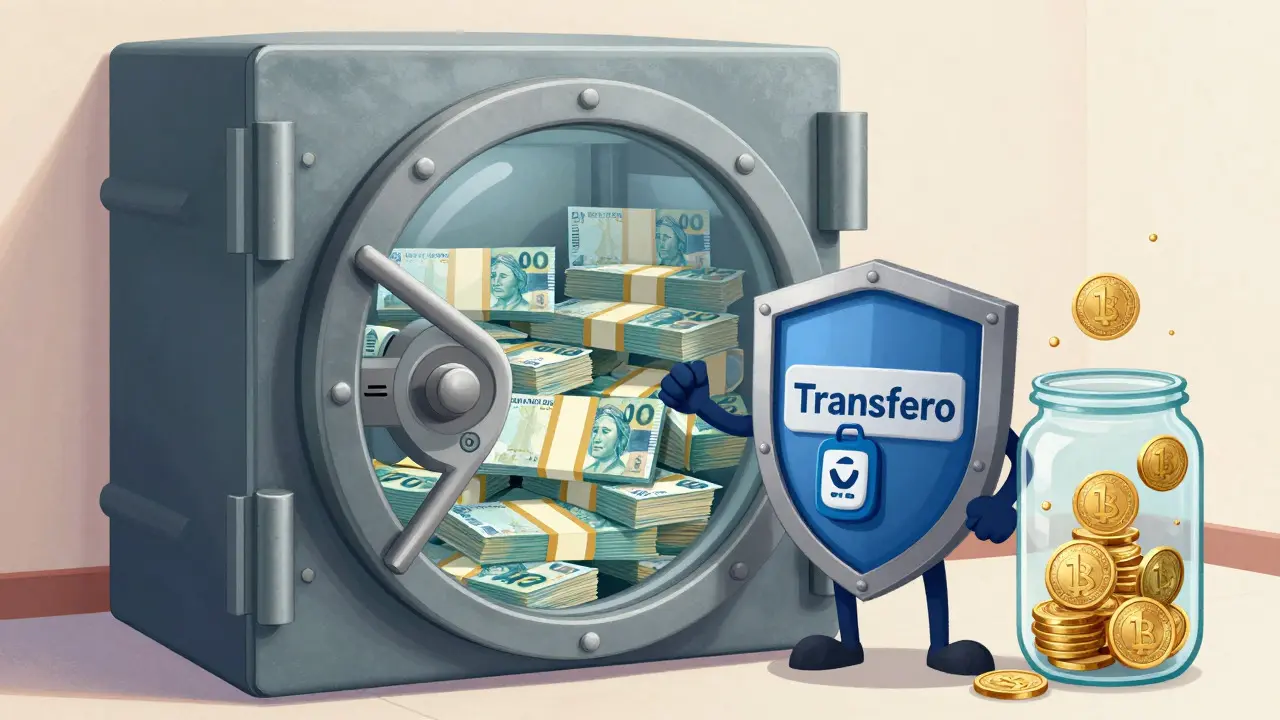
- Reserve Management: Transfero holds actual Brazilian Reais in audited bank accounts.
- Minting: When a user wants BRZ, they send BRL to Transfero. In return, new BRZ tokens are minted and sent to the user’s wallet at a 1:1 ratio.
- Redemption: If a user wants their cash back, they send BRZ to Transfero, burn the tokens, and receive BRL back.
This model relies heavily on transparency. Unlike algorithmic stablecoins that use complex code to maintain pegs (which can fail catastrophically, as seen with TerraUSD in 2022), BRZ uses hard assets. The value comes from the physical money sitting in the bank, verified by third-party audits.
Market Performance and Liquidity in 2026
Let’s look at the numbers. As of early 2026, the data surrounding BRZ presents some interesting contradictions that traders should watch closely. On paper, the token maintains a circulating supply of approximately 1 billion units. However, the market capitalization figures vary significantly depending on which exchange you check.
| Metric | CoinMarketCap Report | Coinbase Report |
|---|---|---|
| Price per Token | $0.1905 USD | $0.18 USD |
| Market Cap | $190.37 Million | $32.66 Million |
| 24h Volume | $48,136 USD | N/A (Low liquidity) |
Why such a huge gap in market cap? It often comes down to how different aggregators calculate fully diluted valuation versus circulating supply, or discrepancies in real-time data feeds from smaller exchanges. Regardless of the exact number, one thing is clear: trading volume is modest. With daily volumes hovering around $50,000 to $80,000, BRZ is not a high-liquidity asset like USDT or USDC.
This low liquidity is a double-edged sword. On one hand, it means fewer whales manipulating the price. On the other hand, if you try to sell a large amount of BRZ quickly, you might experience slippage-meaning you get less money than expected because there aren't enough buyers at that moment. For large institutional investors, this lack of depth might be a deterrent. For retail users moving small amounts, it is usually manageable.
The token hit its all-time high of $0.33 USD in August 2024. Since then, it has declined by roughly 46%, settling in a range between $0.09 and $0.25. This volatility is unusual for a stablecoin, suggesting that while the peg to BRL exists in theory, market forces sometimes push the USD price away from the theoretical conversion rate due to limited arbitrage opportunities.
Where Can You Trade BRZ?
If you decide to use BRZ, you need to know where it lives. Unlike Bitcoin, which is everywhere, BRZ has a narrower presence. It is primarily traded on decentralized exchanges (DEXs) and a few centralized platforms.
The highest activity is seen on Uniswap V4 and NovaDAX. Uniswap, particularly on the Polygon network, offers lower fees for swapping BRZ against USDT or ETH. NovaDAX, an exchange focused on Latin American markets, provides a more traditional order-book experience.
You will also find BRZ on platforms like Meteora. However, you won’t see it listed on every major tier-one exchange like Binance or Coinbase Pro in prominent pairs. This limited distribution reinforces its niche status. It is a tool for specific regional needs rather than a global household name.

Risks and Considerations for Users
No cryptocurrency is risk-free, and BRZ has specific vulnerabilities you must consider before investing or holding it.
Regulatory Risk: Brazil has been actively developing its own regulatory framework for digital assets. While BRZ was created to comply with local norms, changes in law could impact how Transfero manages reserves or issues tokens. Always stay updated on Central Bank of Brazil announcements.
Counterparty Risk: Because BRZ is centralized in terms of issuance (Transfero controls the minting), you are trusting them to keep the reserves intact. If Transfero fails, goes bankrupt, or mismanages funds, the token could lose its backing. Regular audits help mitigate this, but they do not eliminate it entirely.
Liquidity Risk: As mentioned, the trading volume is low. In a market panic, you might find it difficult to exit a position quickly without affecting the price. Compare this to USDT, which has billions in daily volume. BRZ is nowhere near that level.
Is BRZ Still Relevant in 2026?
The crypto landscape has shifted dramatically since BRZ launched. We now have widespread adoption of USD-backed stablecoins even in emerging markets. Many Brazilians simply convert BRL to USDT via P2P (peer-to-peer) markets on Binance or Bybit. This raises the question: why use BRZ?
The answer lies in direct integration and potential future utility. If Transfero successfully integrates BRZ into local payment networks or merchant solutions within Brazil, it could offer a smoother experience than converting to USDT and back again. Additionally, for developers building DeFi apps specifically targeting the Brazilian market, having a native BRL-pegged asset reduces friction.
However, for the average investor looking purely for profit, BRZ is likely not the best choice. Its price movements are driven more by supply/demand imbalances on small exchanges than by fundamental economic shifts in Brazil. If you want exposure to the Brazilian economy, traditional forex or ETFs might be safer. If you want crypto stability, USDC or DAI are more liquid and battle-tested.
BRZ remains a fascinating experiment in regional stablecoins. It proves that local currencies can exist on the blockchain. Whether it becomes a mainstream tool or remains a niche instrument depends on Transfero’s ability to expand partnerships and increase liquidity. For now, treat it as a specialized utility token rather than a general-purpose investment.
Is BRZ a good investment for beginners?
Probably not. BRZ is a stablecoin designed for utility, not growth. Beginners should start with more liquid assets like Bitcoin or Ethereum. If you need a stablecoin, USDC or USDT offer better liquidity and wider acceptance. BRZ is best suited for those who specifically need to trade Brazilian Reais on-chain.
How does BRZ maintain its peg to the Brazilian Real?
BRZ maintains its peg through a 1:1 reserve system. For every BRZ token in circulation, Transfero holds one Brazilian Real in audited bank accounts. Users can redeem tokens for cash, which helps align the market price with the actual value of the reserve.
Can I store BRZ in MetaMask?
Yes. Since BRZ is an ERC-20 token on Ethereum (and also available on Polygon), you can add it to MetaMask by importing the contract address. Make sure you are on the correct network (Ethereum or Polygon) to see your balance and avoid lost funds during transfers.
What is the difference between BRZ and USDT?
The main difference is the underlying currency. USDT is pegged to the US Dollar, while BRZ is pegged to the Brazilian Real. USDT has vastly higher liquidity and global adoption. BRZ is a niche tool for users who want to keep their exposure tied to the Brazilian economy without leaving the blockchain.
Who issues the Brazilian Digital Token?
BRZ is issued by Transfero, a fintech company based in Brazil. They manage the reserves, handle minting and burning of tokens, and ensure compliance with local regulations. Their role is central to the token's existence, making them a single point of failure if not properly regulated.