Decentralized Identifiers: What They Are and Why They Matter in Crypto
When you log into a website, you’re usually handing over your identity to someone else—a company, a server, a database. But what if you could own your identity instead? That’s where decentralized identifiers, unique, verifiable digital IDs that you control without relying on central authorities. Also known as DIDs, they let you prove who you are online without giving up your data. Unlike usernames and passwords tied to Google or Facebook, DIDs live on blockchains or decentralized networks. You hold the keys. No middleman. No tracking. Just you and your identity.
Decentralized identifiers are part of something bigger called self-sovereign identity, a system where individuals control their own digital credentials without needing permission from corporations or governments. This isn’t just theory—it’s already being used in crypto wallets, DeFi platforms, and even government pilot programs. For example, if you’re verifying your age to access a service, you can prove you’re over 18 without showing your driver’s license or birth certificate. The system checks a cryptographic signature linked to your DID, not your personal info. That’s the power of Web3 identity, the next evolution of online identity built on blockchain tech and user ownership. It’s not about replacing your name—it’s about replacing the way you prove it.
Why does this matter for crypto users? Because every time you connect a wallet, sign a transaction, or join a DAO, you’re revealing something about yourself. Without DIDs, you’re stuck using the same wallet address across dozens of platforms, making you trackable, targetable, and vulnerable. With DIDs, you can create separate, privacy-preserving identities for different uses—one for trading, one for governance, one for gaming—without linking them together. This isn’t just privacy. It’s security. It’s freedom.
Right now, most crypto users don’t think about identity. They think about price. But as regulations tighten and scams grow more sophisticated, the ones who understand and use decentralized identifiers will be the ones who stay safe. The posts below cover real examples: how DIDs are being built, how they’re being abused, and how you can start using them—even if you’re not a developer. You’ll find guides on DID wallets, breakdowns of blockchain-based identity protocols, and warnings about fake identity systems pretending to be decentralized. This isn’t future tech. It’s the next layer of crypto literacy—and you’re already behind if you haven’t looked into it yet.
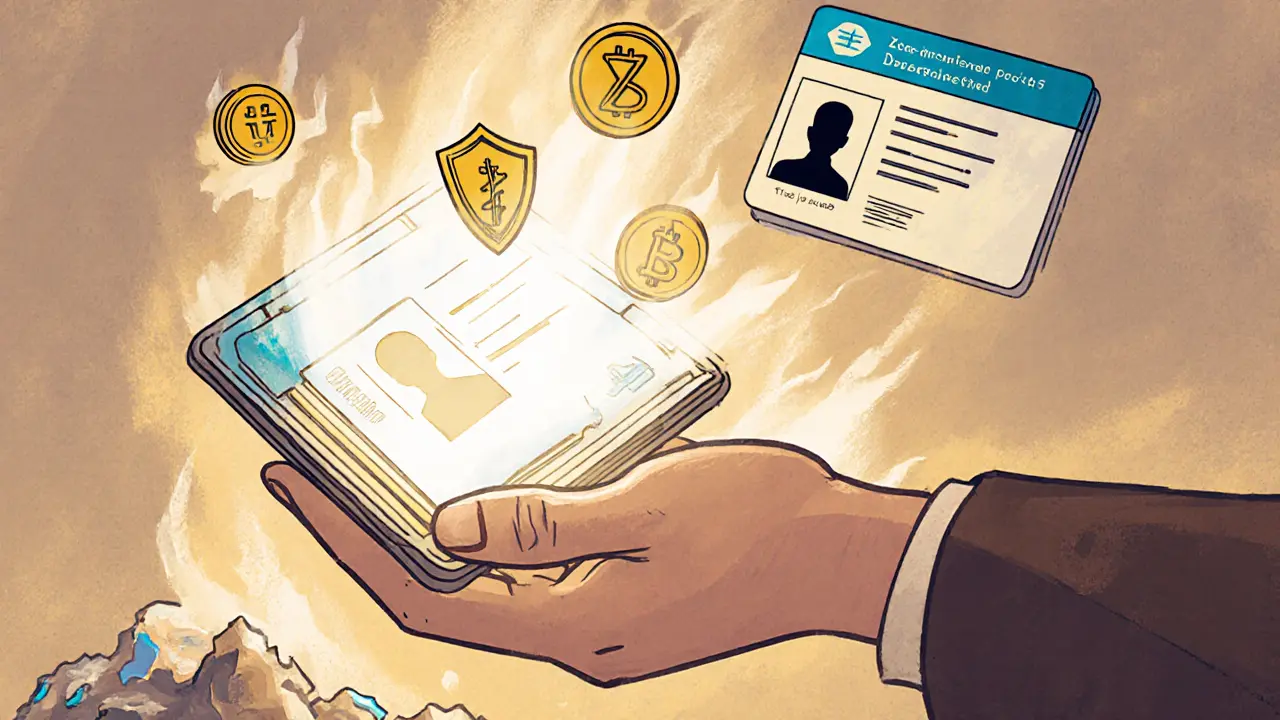
Privacy-Preserving Identity Verification: How Blockchain Keeps Your Data Safe
Privacy-preserving identity verification uses blockchain and cryptography to prove who you are without revealing your personal data. Learn how zero-knowledge proofs and decentralized IDs are replacing traditional ID checks.