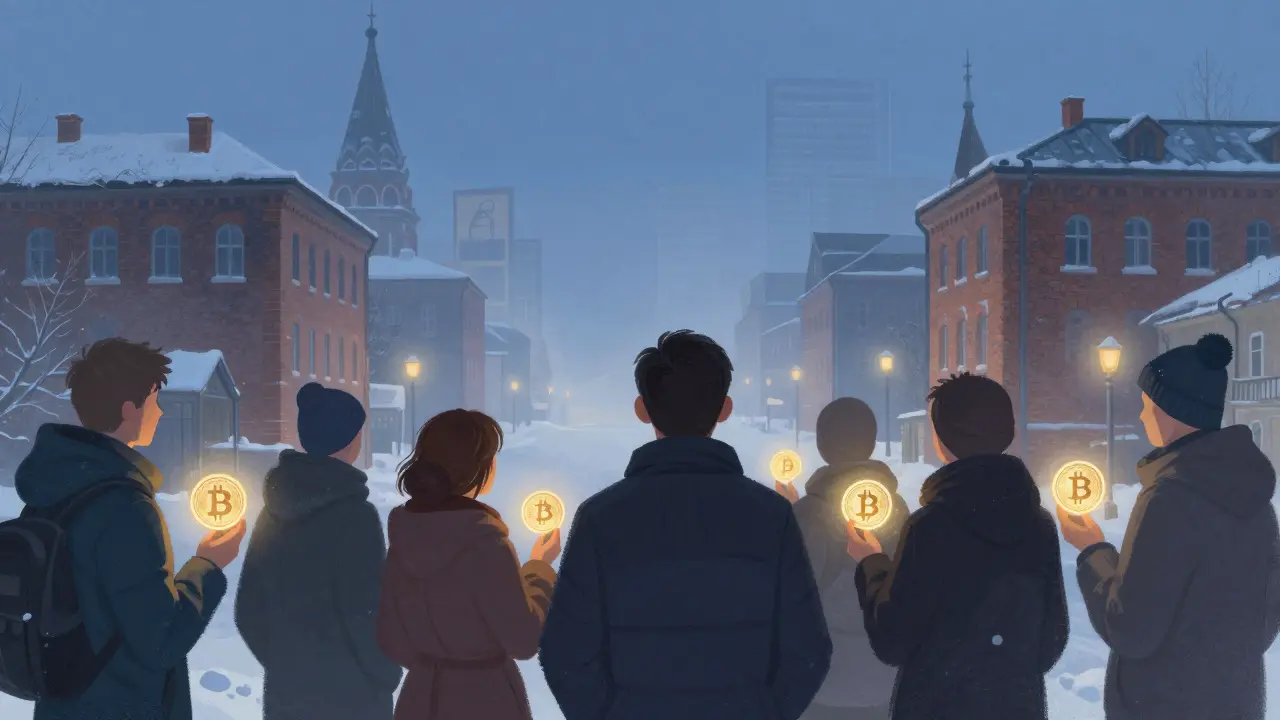
Imagine a country where using Bitcoin for everyday purchases is technically illegal, yet millions of people rely on it to survive economically. This is the reality of Crypto adoption in Russia, which is a complex ecosystem driven by geopolitical isolation and regulatory ambiguity. As of mid-2026, approximately 20 million Russians actively use cryptocurrencies. That is roughly 13.6% of the population. They aren’t doing it just to get rich quick. They are doing it because traditional banking channels have been severed from the global financial system.
The story of crypto in Russia isn't about innovation alone; it's about necessity. Since the escalation of international sanctions following the 2022 invasion of Ukraine, the Russian financial infrastructure has faced unprecedented pressure. Western payment systems like Visa and Mastercard exited the market. Banks were cut off from SWIFT. In this vacuum, cryptocurrency became the only reliable bridge to the outside world. But the government’s response hasn't been simple acceptance. It has been a cautious, often contradictory dance between restriction and reluctant integration.
The Paradox of Legal Status
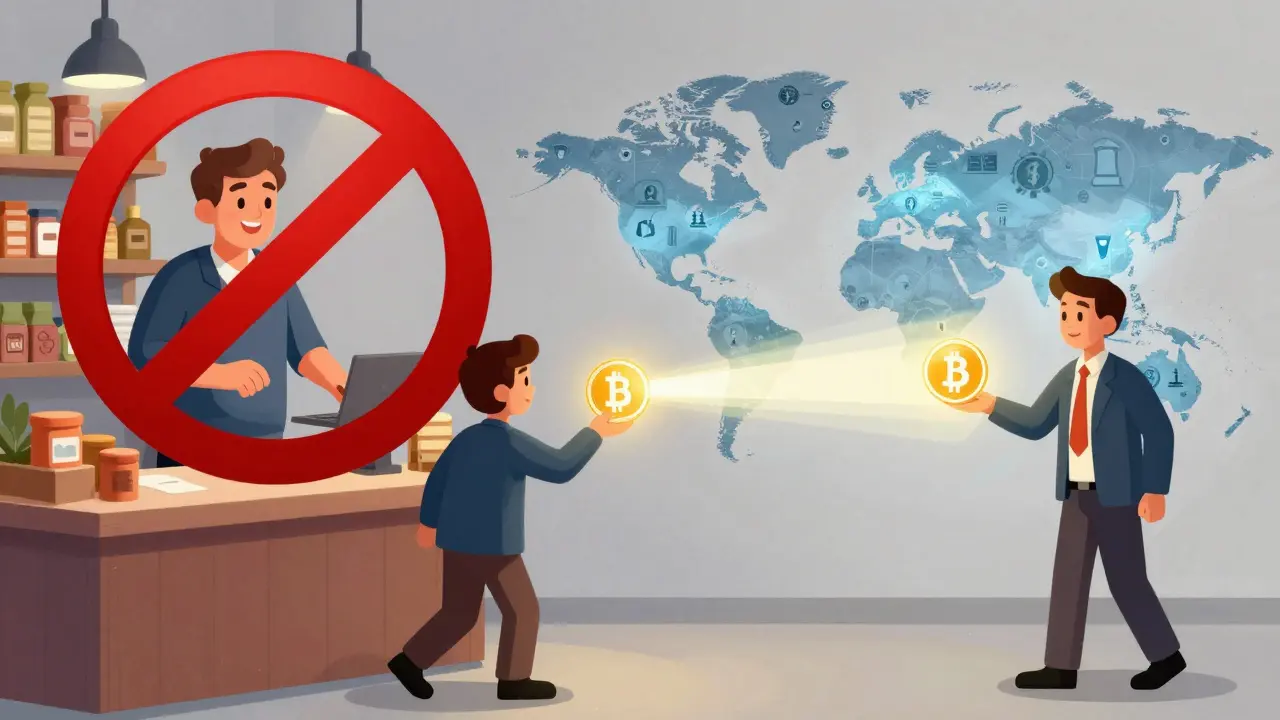
To understand why adoption is so high despite restrictions, you need to look at the law. The cornerstone of Russian crypto regulation is Federal Law No. 259-FZ, known as the "On Digital Financial Assets" law, which came into effect on January 1, 2021. This law created a confusing legal gray area. It explicitly allows citizens to own cryptocurrencies. You can buy Bitcoin, store it in a wallet, and sell it for rubles. However, it strictly prohibits using cryptocurrency as a means of payment for goods and services within the country.
This creates a bizarre situation. You can hold the asset, but you can't spend it at your local grocery store or pay your contractor with it. According to Statista's merchant adoption survey from September 2025, less than 0.5% of Russian businesses accept cryptocurrency directly. Compare that to the global average, which hovers around 3.5%. For most merchants, accepting crypto is too risky due to tax uncertainties and lack of clear accounting standards.
So, if you can't spend it, why do 20 million people use it? Because they aren't using it to buy bread. They are using it to preserve value against inflation and to move money across borders. Deputy Finance Minister Ivan Chebeskov acknowledged this shift in October 2025, stating that the government must address crypto to "secure economic and technological benefits." He admitted that resisting the trend is no longer an option when such a large portion of the population is already involved.
Sanctions as an Adoption Catalyst
The primary driver of crypto adoption in Russia is not technological superiority, but geopolitical exclusion. When traditional banks froze accounts or blocked transfers to foreign entities, crypto became the lifeline for international trade. Small business owners exporting software or hardware found themselves unable to receive payments via standard wire transfers. Crypto, particularly stablecoins like USDT (Tether) and USDC, offered a solution.
Consider the case of 'TechExportRU,' a small software exporter documented in Telegram crypto communities. By switching to USDT payments for clients in Southeast Asia, they reduced transaction costs by 40%. Traditional international wire transfers take 3-5 business days and charge fees of 3-5%. Crypto transactions settle in 10-15 minutes with fees often below 0.5%. For a business operating on thin margins, that difference is life or death.
This utility extends beyond businesses. Regular citizens use crypto to access foreign streaming services, pay for international cloud hosting, or send remittances to family members abroad. A user named 'CryptoMoscow2025' noted on Reddit in October 2025: "Since Western payment systems blocked us, Bitcoin became essential for importing business software and paying international contractors." This sentiment is echoed by 87% of positive reviews on domestic platforms like Kuna.io, where users praise speed and lower fees.
Market Metrics and Asset Distribution
The scale of this adoption is staggering. As of March 31, 2025, the total value of cryptocurrency held in exchange wallets in Russia reached 827 billion rubles, approximately $10.15 billion USD. This represents a 27% year-over-year increase from March 2024. The Bank of Russia tracks these balances quarterly, showing a consistent upward trend despite regulatory warnings.
| Asset Type | Share of Holdings | Primary Use Case |
|---|---|---|
| Bitcoin (BTC) | 62.1% | Long-term value storage, hedge against inflation |
| Ether (ETH) | 22.0% | Smart contracts, DeFi interactions (limited) |
| Stablecoins (USDT/USDC) | 15.9% | Cross-border payments, daily transactions |
| Other Altcoins | 0.1% | Speculative trading |
Bitcoin dominates the landscape, holding over 60% of all assets. This reflects its role as "digital gold"-a store of value rather than a medium of exchange. Stablecoins make up nearly 16%, highlighting their practical utility for moving value without volatility. Ether holds a significant share, though decentralized finance (DeFi) usage remains low compared to global leaders. Chainalysis ranks Russia #52 in DeFi value received, indicating that while users hold Ethereum, they rarely interact with complex DeFi protocols due to technical barriers and regulatory fear.
Global Rankings and Institutional Shifts
How does Russia compare to the rest of the world? The Chainalysis 2025 Global Crypto Adoption Index ranks Russia #10 overall. This is a slight drop from #8 in 2024, but still places it among the top tier of nations. What makes Russia unique is its institutional strength. Russia ranks #4 globally in institutional centralized service value received. This suggests that large players, including corporations and wealthy individuals, are heavily integrated into the crypto economy.
In contrast, retail adoption is strong but slightly less dominant, ranking #8. This contrasts with countries like Ukraine (#1 overall), where retail usage drives the index. Russia’s position between Moldova (#2) and the United Kingdom (#11) underscores its resilience. Despite being cut off from major global exchanges like Binance (which suspended operations in Russia in 2022), domestic alternatives have stepped up.
Platforms like EXMO and BitPrepay have filled the void left by international giants. However, the ecosystem is fragile. Garantex, once a major player, was shut down by U.S. Treasury sanctions in September 2022. This event sent shockwaves through the community, leading to increased caution. Today, there are approximately 45 domestic crypto platforms, down from 62 in 2023. The top five control 78% of transaction volume, creating a concentrated market vulnerable to regulatory crackdowns.

Risks and Regulatory Uncertainty
High adoption comes with high risk. The regulatory environment in Russia is volatile. Policies change frequently, with an average of 2.3 significant regulatory updates per quarter in 2025, according to Chainalysis data. Users often find themselves navigating sudden freezes or new compliance requirements.
A survey by FinProm Analytics in April 2025 revealed that 28% of users reported account freezes during the Bank of Russia's March 2025 compliance review cycle. One user, 'SberbankCryptoUser,' shared on the Banki.ru forum: "My exchange account was frozen for 3 weeks during a routine verification, causing me to miss a critical market opportunity worth 250,000 rubles." These incidents highlight the lack of consumer protection. Unlike in jurisdictions with established crypto laws, Russian users have limited recourse if a platform fails or acts arbitrarily.
Fraud and hacking are also persistent threats. With the absence of regulated centralized exchanges, many users turn to peer-to-peer (P2P) transactions and decentralized exchanges. While P2P offers privacy, it lacks the escrow protections of formal platforms. Scams targeting inexperienced users are common, particularly on social media platforms like Telegram, where unverified groups promise high returns.
The Future: Integration or Isolation?
The direction of Russian crypto policy remains uncertain, but signs point toward gradual integration. On October 10, 2025, Vladimir Chistyukhin, an official at the Bank of Russia, announced plans to allow banks to handle cryptocurrency transactions under "strict capital and reserve requirements." This would be a monumental shift, moving crypto from the shadows into the formal banking sector.
The central bank has scheduled a comprehensive survey of cryptocurrency investments and lending activity between January 15 and February 28, 2026. This data will likely inform future legislation. The Finance Ministry has signaled potential changes to the "On Digital Financial Assets" law during the 2026 parliamentary session. If implemented, these changes could legitimize crypto as a recognized asset class, providing clearer tax guidelines and consumer protections.
However, international pressures remain. The U.S. Treasury Department indicated "heightened scrutiny of Russian crypto activities" in its September 2025 sanctions enforcement update. Any move toward formal integration could trigger further sanctions, potentially isolating Russia even more deeply. The Atlantic Council's GeoEconomics Center warns that the "absence of US leadership and standards setting" could lead to a fragmented global financial system, with Russia developing alternative infrastructure.
For the average Russian citizen, the outlook is mixed. On one hand, crypto provides a crucial escape valve from economic isolation. On the other, the risks of regulatory crackdowns and platform failures are real. As the government seeks to regain control over this decentralized space, users must stay vigilant, educated, and adaptable.
Is it legal to own cryptocurrency in Russia?
Yes, it is legal to own and trade cryptocurrencies in Russia. Federal Law No. 259-FZ allows citizens to hold digital assets. However, using cryptocurrency as a direct payment method for goods and services within the country is prohibited.
Why is crypto adoption so high in Russia despite restrictions?
Adoption is driven by necessity due to international sanctions. With traditional banking channels restricted, crypto serves as a vital tool for cross-border transactions, preserving value against inflation, and accessing global services that are otherwise blocked.
Which cryptocurrencies are most popular in Russia?
Bitcoin is the most popular, holding 62.1% of total holdings as of March 2025. Ethereum follows with 22%, and stablecoins like USDT and USDC account for 15.9%, primarily used for transactions due to their price stability.
Can Russian banks process cryptocurrency transactions?
Currently, banks cannot directly process crypto transactions. However, the Bank of Russia announced plans in late 2025 to allow banks to handle crypto under strict regulations, pending further legislative changes expected in 2026.
What are the main risks for crypto users in Russia?
Key risks include regulatory uncertainty, frequent policy changes, account freezes by exchanges, and lack of consumer protection. Additionally, fraud and scams are prevalent, especially in peer-to-peer transactions and unregulated platforms.
How does Russia rank globally in crypto adoption?
According to the Chainalysis 2025 Global Crypto Adoption Index, Russia ranks #10 overall. It performs exceptionally well in institutional adoption (#4) but lags in decentralized finance (DeFi) usage (#52).





Eric Scheinberg
June 22, 2026 AT 04:04The regulatory ambiguity described here is fascinating yet precarious. One must consider the long-term implications of such a fragmented financial ecosystem. The reliance on stablecoins for cross-border transactions suggests a pragmatic adaptation to geopolitical constraints rather than ideological alignment with decentralization. It is crucial to observe how these informal systems evolve under pressure.
Lee Paige
June 22, 2026 AT 16:39This entire narrative is a fabrication designed to normalize financial isolation. The West claims they are sanctioning Russia, but in reality, they are forcing the population into a shadow economy that benefits no one. Bitcoin is not freedom; it is a tool for money laundering and evading justice. The fact that banks are being cut off from SWIFT proves that this is an economic war, not a technological evolution. People should be aware that their assets are at risk of total confiscation if the government decides to tighten the screws further. Do not fall for the hype about 'digital gold' when the system itself is built on coercion.
Jessica Lane
June 23, 2026 AT 22:35I find the human element of this story incredibly moving. Imagine having to navigate your daily finances through a complex web of crypto wallets just to pay for software or send money to family. It highlights the resilience of people who refuse to give up despite systemic barriers. I hope that eventually, clearer regulations will provide some stability and protection for these users. Their struggle deserves more empathy than just statistical analysis.
Skm Shubham
June 23, 2026 AT 22:43Typical western media spin. They call it 'necessity' while ignoring the massive inefficiencies and risks involved. You think 20 million people are using crypto because they love blockchain? No. They are desperate. And desperation leads to mistakes. Scams are rampant, accounts get frozen without warning, and there is zero recourse. This is not a sophisticated financial ecosystem; it is a chaotic mess driven by fear. The average user loses more to fees and fraud than they save on transaction costs. Wake up.
John Doe
June 25, 2026 AT 07:03The sheer scale of this adoption is mind-boggling. To think that over 60% of holdings are in Bitcoin shows a deep-seated distrust in the fiat currency. It is almost like a silent rebellion against the state's monetary policy. When you cannot trust your bank, you trust the code. It is dramatic, yes, but also logical given the circumstances. The government tries to ban payments, but they cannot ban ownership. That is where the power lies.
Rob Aronson
June 25, 2026 AT 21:31From a DeFi perspective, the low usage of Ethereum-based protocols in Russia is telling 📉. It’s not just about regulation; it’s about UX friction and gas fees. Most users are sticking to BTC and USDT because the barrier to entry for smart contracts is too high for the average person trying to survive inflation. The institutional shift towards centralized exchanges like EXMO makes sense from a liquidity standpoint, even if it contradicts the ethos of decentralization. We need better L2 solutions to bridge this gap 🌉.
Danna Charris
June 26, 2026 AT 18:51Let us be clear. This is not innovation. It is survival mode. The elite will always find ways to move their wealth offshore, regardless of the medium. For the common citizen, this is a dangerous game. The pretension of calling it 'adoption' ignores the predatory nature of unregulated markets. Only the informed survive here.
Fede Faith
June 26, 2026 AT 22:26I’ve been following the Russian crypto scene closely, and the shift to P2P trading is huge. It’s risky, sure, but it’s the only way to bypass the banking blocks. If you’re new to this, please educate yourself on security. Use hardware wallets, verify counterparty reputations, and never share your seed phrase. It’s assertive, but necessary advice. The community looks out for each other, but you have to do your own homework first.
Josh Dodson
June 27, 2026 AT 01:39honestly this is wild. i mean really wild. like imagine living in a place where u cant use visa so u just buy bitcoin instead. its crazy how fast ppl adapt. i dont know much about crypto but it sounds scary af. hope everyone stays safe out there lol.
Alexis Abster
June 28, 2026 AT 10:07This is absolutely heartbreaking yet inspiring. To see millions of people turning to technology as a lifeline when traditional systems fail them is a testament to human ingenuity. But we must not romanticize the struggle. The stress of account freezes and the threat of scams is real. We need global cooperation to ensure that financial tools are accessible to all, not just those in sanctioned nations. Let’s keep pushing for inclusive financial systems.
Brad Ranks
June 29, 2026 AT 15:10Wait, so let me get this straight. The government says it’s illegal to spend crypto, but everyone is doing it anyway? That’s hilarious. It’s like Prohibition all over again. The black market thrives when the legal market is broken. I bet the tax collectors are losing their minds trying to track these transactions. It’s a drama queen situation for the central bank. They can’t stop it, they can’t control it, so they just pretend it doesn’t exist until it does.
Caitlin Donahue
June 29, 2026 AT 20:44i think its pretty cool how they found a workaround. its kinda messy tho. lots of typos in my head right now but basically, sanctions force innovation. whether thats good or bad is debatable. i just hope people dont lose their savings. its a tricky balance between freedom and safety. maybe the new laws will help?
Karthikeyan S
June 30, 2026 AT 05:27Ugh, reading this gives me anxiety 😩. Why is everything so complicated? I just want to buy bread without worrying about blockchain forks. These analysts make it sound like a strategy game, but for regular people, it’s just stress. And don’t get me started on the scams. Everyone is trying to steal your coins. It’s exhausting just thinking about it. 🤯
Dinesh Pattigilli
July 1, 2026 AT 14:14You fools still believe in the mainstream narrative? The truth is, Russia is building the future of finance while the West clings to its dying fiat empire. The elites in Moscow know what they are doing. They are creating a parallel system that will outlast the dollar hegemony. Your 'risks' are merely growing pains of a superior economic model. Stop crying about scams and start learning how to secure your nodes. Ignorance is bliss, but it won’t save your portfolio.
verna kennedy
July 2, 2026 AT 05:38It is quite amusing to watch the panic. The article claims high adoption, but let’s look at the quality of that adoption. It is largely speculative and driven by fear. There is no sustainable economic model here, just a temporary patch for a broken system. When the dust settles, most of these platforms will be gone. The smart money has already left. The rest are just holding bags.
Kelly Tenney
July 3, 2026 AT 11:48I really appreciate the detailed breakdown of the asset distribution. It helps to understand that Bitcoin is seen as a store of value, not a spending currency. This distinction is vital for anyone looking to enter the space. I encourage everyone to read up on the specific laws mentioned, like Federal Law No. 259-FZ. Knowledge is power, especially in such a volatile environment. Let’s support each other by sharing accurate information and staying calm amidst the chaos.
Akeem Whittaker
July 3, 2026 AT 19:11Stop whining about the risks and start adapting. The world is changing, and those who cling to outdated banking methods will be left behind. Crypto is not going away. It is the only logical response to a hostile financial environment. If you are too scared to handle a private key, you deserve to lose your money. Assertiveness is required here. Take control of your assets or remain a victim of the system. There is no middle ground.